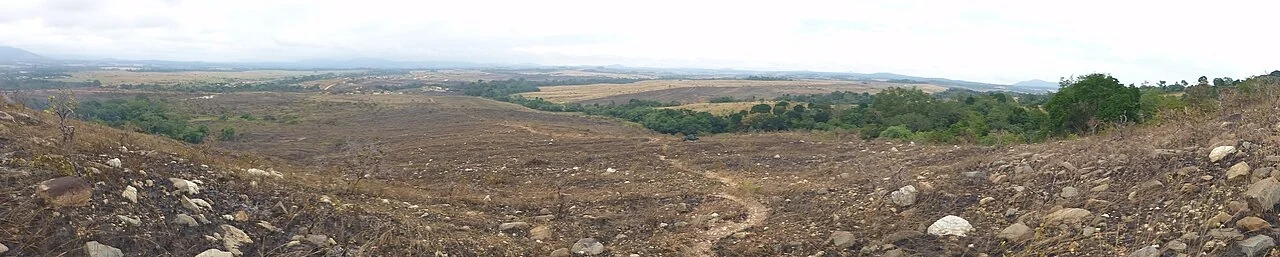
Lope National Park after seasonal burning, Gabon. Dated panorama; not a description of its present condition.

Gabon · Habitat field guide

Savanna & grassland

The savanna patches of Lopé are a local example within a largely forested setting. They should not be extrapolated across every regional guide.

Lope National Park after seasonal burning, Gabon. Dated panorama; not a description of its present condition.

Photograph: Ngangorica · Image source · CC BY-SA 4.0. Cropped to fill the hero; darkened for text legibility.

Understanding the environment

A sense of the habitat.

The savanna patches of Lopé are a local example within a largely forested setting. They should not be extrapolated across every regional guide.

Geographic scope
Gabon; named examples and source scope matter.
Evidence scale
Landscape context is separate from species locality evidence.
Source chronology
Consult the original publication date; checked 12 October 2026.

Explore the structure · Select a layer to compare the details a locality record can preserve.

Read the setting in three layers.

Select a zone to see what changes.

Open ground

Open ground

Distinguish grassland from recently cleared or cultivated ground.

Compare this detail with the original field or museum record before assigning a habitat association.

These reading prompts explain how to interpret evidence; they do not assert that every feature occurs at every site.

Sources: UNESCO · Lopé–Okanda

Field notes · 01

The documented landscape

The savanna patches of Lopé are a local example within a largely forested setting. They should not be extrapolated across every regional guide.

Sources: UNESCO · Lopé–Okanda

Field notes · 02

Connect habitat and locality

Use the species account to check whether a habitat statement applies to this country or elsewhere in the species’ range. A landscape photograph illustrates its own named place; it is not evidence of snake presence.

Pressures on Gabon’s habitats

What is at risk?

A site-specific assessment of pressures has not yet been extracted for this guide. The landscape sources below provide context; they do not establish a current threat level for each snake species.

What helps this habitat

Retain natural vegetation and water connections where local conservation evidence supports them. Consult the linked national or site account for the pressures and management actions actually reported there.

The connected collection

Snakes with habitat evidence.

These 5 species have supported country occurrence and an explicit habitat association in the shared account. The association may come from elsewhere in their range. This is not a complete local habitat inventory; the places above are landscape examples, not asserted collecting sites.

5 species · showing 5

Causus maculatus; Lesio-Louna Reserve - Iboubikro, Republic of the Congo; photographed 2006-07-20.

001 · Viperidae

Spotted Night Adder, West-African Night Adder

Causus maculatus

(HALLOWELL, 1842)

VenomousClinical severity not established

The current taxonomic treatment explicitly lists this country. This is country-scale checklist evidence, not a claim of continuous occupancy or a complete regional inventory. Haut-Ogooué: observation GBIF 4936024193 (2022). The original iNaturalist entry was rechecked for research-grade identification, wild status and unrestricted coordinates; its…

Read the species account →

Tony King · CC BY 4.0 · https://creativecommons.org/licenses/by/4.0/
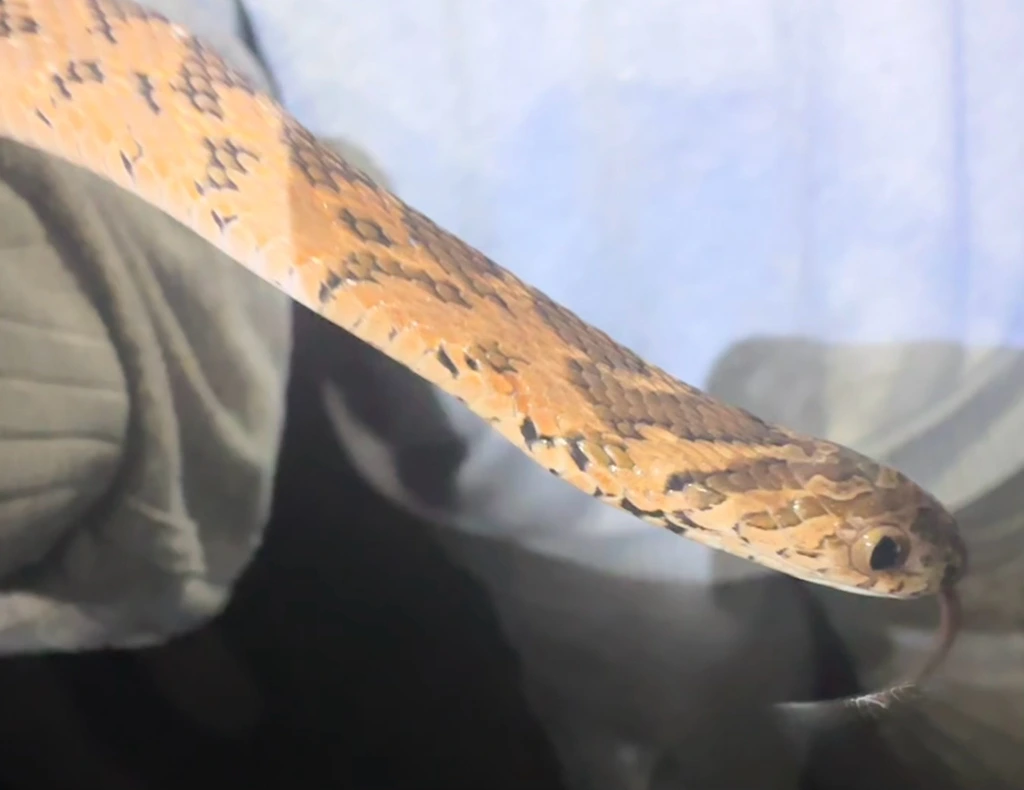
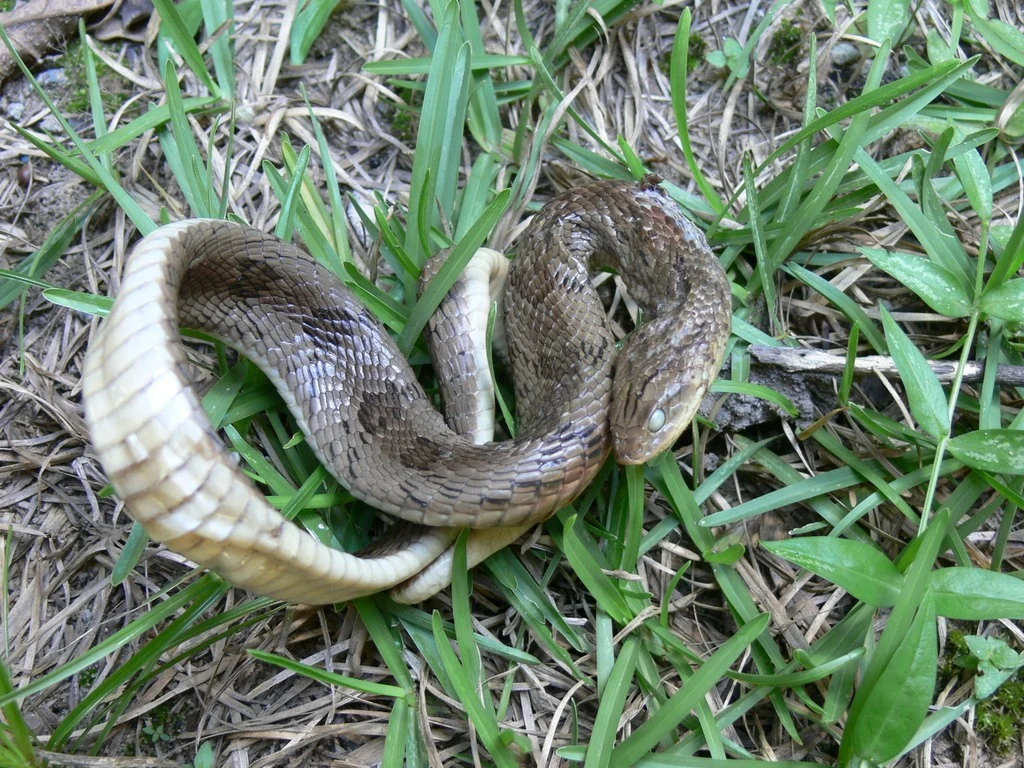
Dasypeltis confusa. Photographed through a transparent container in Angola; this is a handled specimen portrait. Original observation dated 2024-10-30; this portrait does not establish occurrence in other countries.

002 · Colubridae

Diamond-back Egg-eater, Confusing Egg Eater

Dasypeltis confusa

TRAPE & MANÉ, 2006

Venom unknownNot yet assessed

The current taxonomic treatment explicitly lists this country. This is country-scale checklist evidence, not a claim of continuous occupancy or a complete regional inventory.

Read the species account →

Robert Taylor · CC BY 4.0 · https://creativecommons.org/licenses/by/4.0/
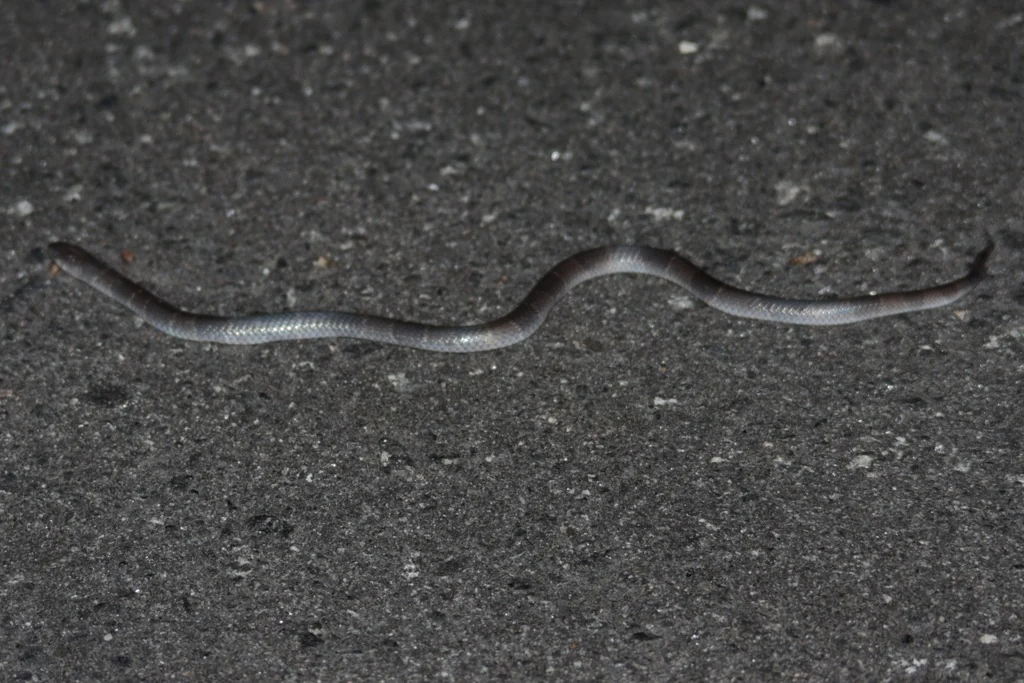
Elapsoidea semiannulata; Yankari, Nigéria; photographed 2008-07-15.

003 · Elapidae

Angolan Garter Snake

Elapsoidea semiannulata

BOCAGE, 1882

VenomousClinical severity not established

The current taxonomic treatment explicitly lists this country. This is country-scale checklist evidence, not a claim of continuous occupancy or a complete regional inventory.

Read the species account →

Fábio Olmos · CC BY 4.0 · https://creativecommons.org/licenses/by/4.0/
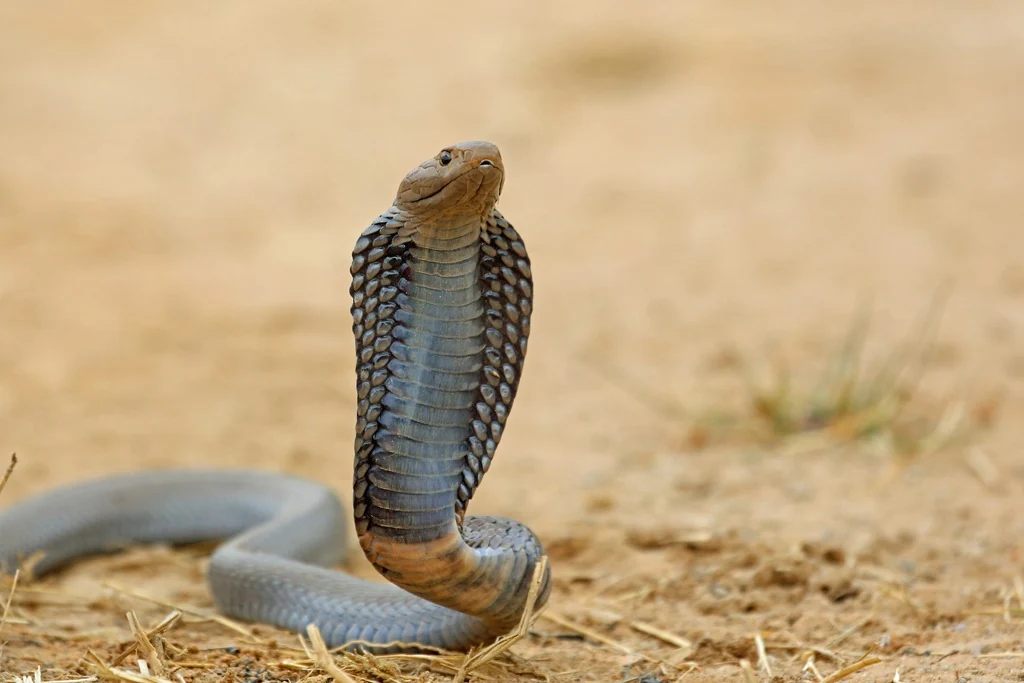
Naja nigricollis; Katanga Province, Democratic Republic of Congo; photographed 2014-08-20.

004 · Elapidae

Black-necked Spitting Cobra

Naja nigricollis

REINHARDT, 1843

VenomousClinical severity not established

The current taxonomic treatment explicitly lists this country. This is country-scale checklist evidence, not a claim of continuous occupancy or a complete regional inventory.

Read the species account →

Nigel Voaden · CC BY 4.0 · https://creativecommons.org/licenses/by/4.0/
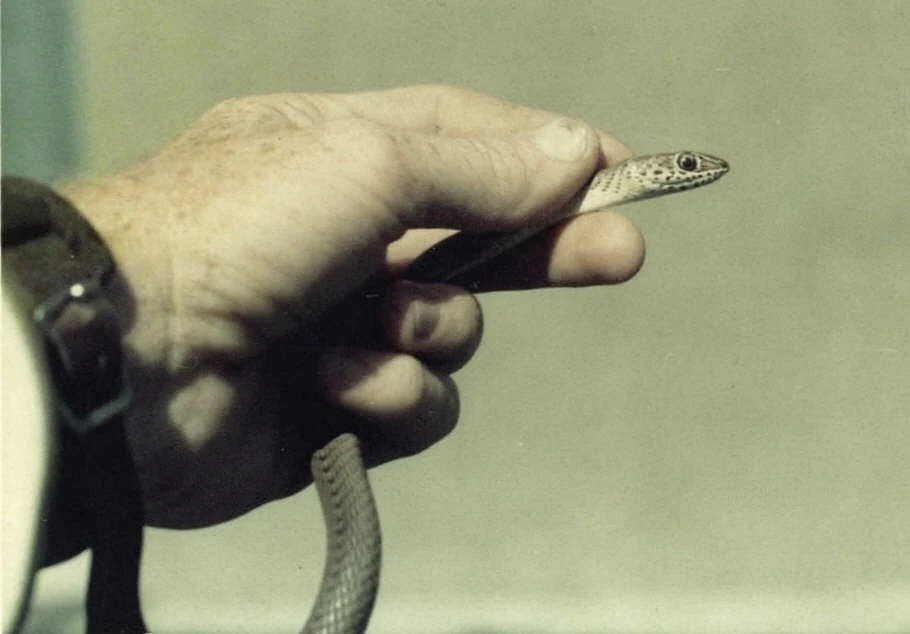
Psammophis mossambicus; Chizarira National Park; photographed 1980-11-30.

005 · Psammophiidae

Olive Whip Snake, Olive Grass Snake,

Psammophis mossambicus

PETERS, 1882

VenomousClinical severity not established

The current taxonomic treatment explicitly lists this country. This is country-scale checklist evidence, not a claim of continuous occupancy or a complete regional inventory. Ogooué-Maritime: observation GBIF 6162994276 (2018). The original iNaturalist entry was rechecked for research-grade identification, wild status and unrestricted coordinates; its…

Read the species account →

i_c_riddell · CC BY 4.0 · https://creativecommons.org/licenses/by/4.0/

All 77 species in the country collection →

Read further

Evidence & sources.

Guide reviewed 12 October 2026. Source dates and geographic scope matter; landscape photographs do not establish species occurrence.

  1. UNESCO · Lopé–Okanda

    Forest and relict-savanna mosaic at Lopé–Okanda; this site does not describe every Gabonese province.

Continue through Gabon

Explore another habitat.

01

Forest & woodland

Lopé–Okanda preserves tropical rainforest beside relict savanna. The contact between these formations is part of the site’s ecological significance.