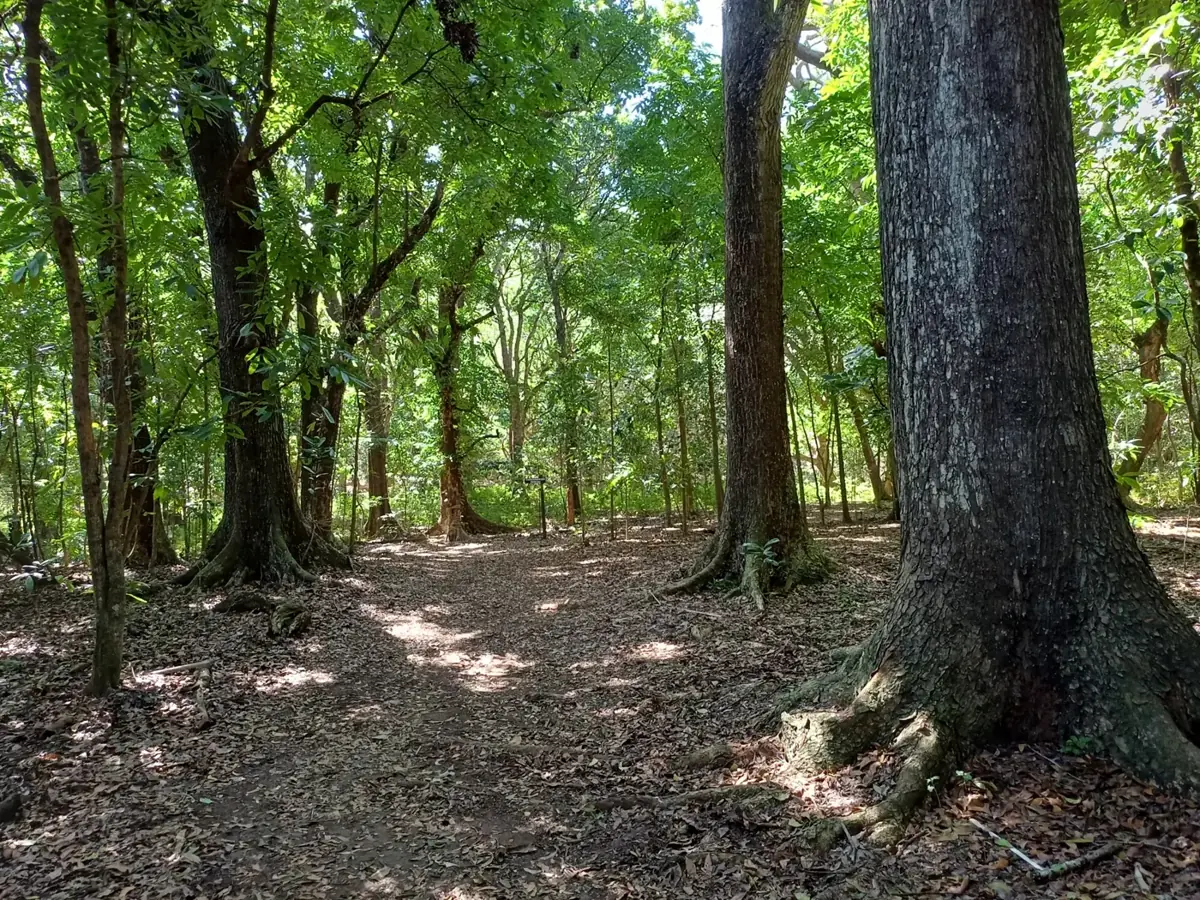
Forest interior at Sigatoka Sand Dunes National Park on Viti Levu, Fiji.

Fiji · Habitat guide

Forest & woodland

Read the canopy, shaded undergrowth and living forest floor.

3species with extracted evidence
2families
5island guides

Forest interior at Sigatoka Sand Dunes National Park on Viti Levu, Fiji.

Photograph: Radosław Botev · Image source · CC BY 3.0 pl. Cropped to fill the hero; darkened for text legibility.

Geography & biotopes

Read the landscape.

Read the canopy, shaded undergrowth and living forest floor.

The national biodiversity framework distinguishes forest catchments, inland water and locally managed marine areas. These are environmental contexts, not evidence that a particular snake occupies every setting.

The selection requires an explicit habitat statement in a checked species account. It describes the species’ reported ecology across its range; it is not proof of a sighting in every local example of this environment.

Fiji: National biodiversity targets submitted to the CBD →

Geography is part of the record

Find your way through Fiji.

Select a named island to open its evidence page. The complete directory below keeps every guide accessible, including places where locality evidence has not yet been extracted.

3 of 8 listed species have at least one indexed island record. 5 remain country-only. Even a nonzero count is not a complete regional inventory.

The species catalogue

Snakes · Forest & woodland.

Country occurrence and species-level habitat evidence are combined here; local habitat occupancy is not inferred.

3 species · showing 3

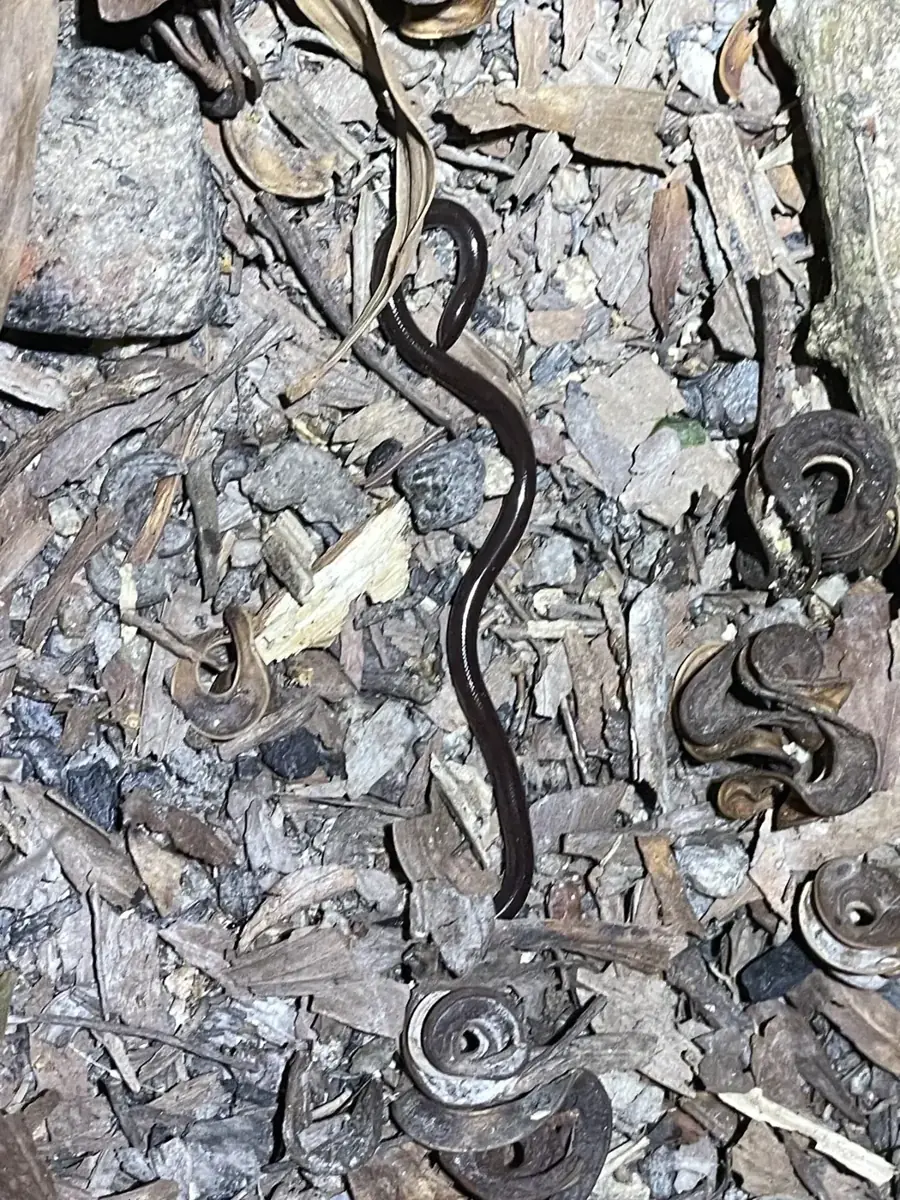
Indotyphlops braminus — photographed on Ko Pha-ngan, Thailand.

001 · Typhlopidae

Flowerpot Snake

Indotyphlops braminus

(DAUDIN, 1803)

Non-venomous

Fiji: introduced record reported since 1983.

Read the species account →

Cook-Price, Makchai & Suwanwaree (2026); photographs credited collectively to the author, James Covert and Vikas Kumar · CC BY 4.0 · https://creativecommons.org/licenses/by/4.0/

Explore all 8 country records →

The research library

Sources & the checklist.

This edition lists 8 species with supported country records from checked taxonomic treatments and cited field studies. This total includes 1 record marked as introduced; it is not a native-species total. It is not a claim of a complete national inventory. Each account retains its source and check date; individual evidence entries retain their own review dates.

Reviewed occurrence evidence

Reviewed country and locality records

Range and taxonomy review

Country links use a single accepted species identity. Revised names and disputed records are kept visible here; uncertain records do not enter the listed collection or regional totals.

How the map and counts work

Search results were checked against distribution text and taxonomic qualifications. A geographic name alone does not establish a political country: New Guinea, the Solomon archipelago and Micronesia span more than one country or territory. Introduced and unresolved records require separate interpretation.

Place counts require explicit named localities, including valid type localities. Counts can overlap where sources name multiple places. Regional maps group historical boundary snapshots for navigation, while island outlines use Natural Earth; neither is a species range or an observation map. Small islands can be below the outline dataset’s resolution, so geographic reference markers and the directory remain available.

Natural Earth 1:10m · public domain. Island label positions are geographic references, not observations. Map provenance →
Exclusions & qualifications (1)

Leptotyphlops howelli

The checked distribution does not establish this political country or territory. A search match or broad ocean/archipelago name alone is insufficient.

Read source 1 ↗
  1. Fiji: National biodiversity targets submitted to the CBD ↗
  2. The Reptile Database

    Individual treatments and locality evidence are linked from each species account.

  3. Meiri (2024): SquamBase 1.0

    Species-level literature measurements and ecological traits. Exact-name matches only; imputed or ambiguous fields are omitted. These summaries are not local observations.

  4. Natural Earth: public-domain geographic data

Continue through the Oceania atlas →