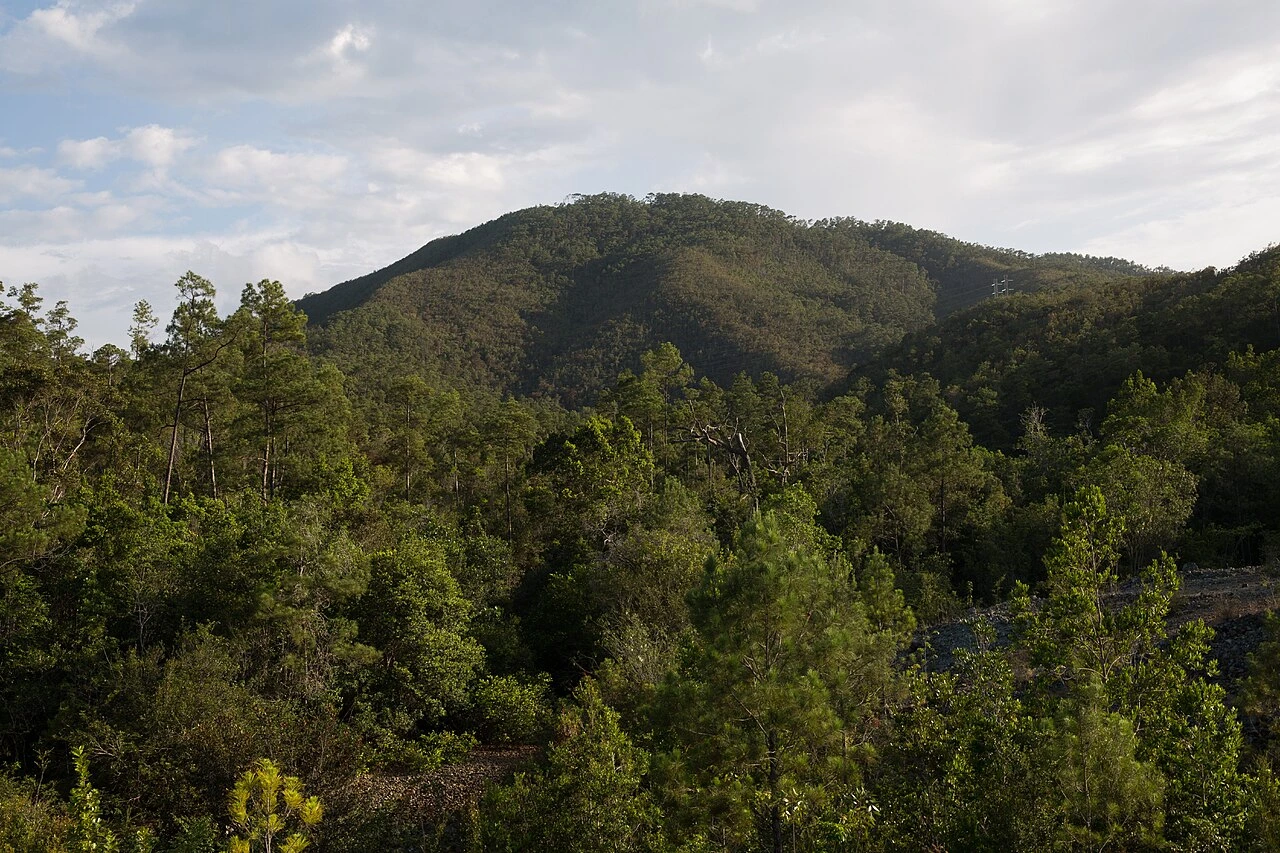
Forested hills in Alejandro de Humboldt National Park, Cuba.

Cuba · Habitat field guide

Forest & woodland

Cuba’s profile describes environments ranging from dry country to humid tropical forest. Forest structure and moisture should remain part of a locality description.

Forested hills in Alejandro de Humboldt National Park, Cuba.

Photograph: Christian Pirkl · Image source · CC BY-SA 4.0. Cropped to fill the hero; darkened for text legibility.

Understanding the environment

A sense of the habitat.

Cuba’s profile describes environments ranging from dry country to humid tropical forest. Forest structure and moisture should remain part of a locality description.

Geographic scope
Cuba; source locality matters.
Evidence scale
Landscape descriptions are separate from species records.
Source date
Retain the cited publication date; reviewed 16 October 2026.

Explore the structure · Select a layer to compare details retained in a field record.

Read the locality in three layers.

Select a zone to see what changes.

Canopy

Canopy

Distinguish closed crowns, open woodland and planted trees.

Check this detail in the original record before assigning a species to the habitat.

These reading prompts are conceptual, not a transect or an occurrence map.

Sources: Convention on Biological Diversity · Cuba national profile

Field notes · 01

The documented setting

Cuba’s profile describes environments ranging from dry country to humid tropical forest. Forest structure and moisture should remain part of a locality description.

Sources: Convention on Biological Diversity · Cuba national profile

Field notes · 02

Connect the setting to a species

A habitat description and a country record answer different questions. Follow the linked species account for evidence of habitat use; an empty filtered collection indicates missing extracted evidence, not biological absence.

Pressures on Cuba’s habitats

What is at risk?

A site-specific assessment of pressures has not yet been extracted for this guide. The landscape sources below provide context; they do not establish a current threat level for each snake species.

What helps this habitat

Consult the source’s own conservation context and dates before interpreting habitat change. A broad landscape pressure does not establish a measured decline for every snake.

The connected collection

Snakes with habitat evidence.

These 7 species have supported country occurrence and an explicit habitat association in the shared account. The association may come from elsewhere in their range. This is not a complete local habitat inventory; the places above are landscape examples, not asserted collecting sites.

7 species · showing 7

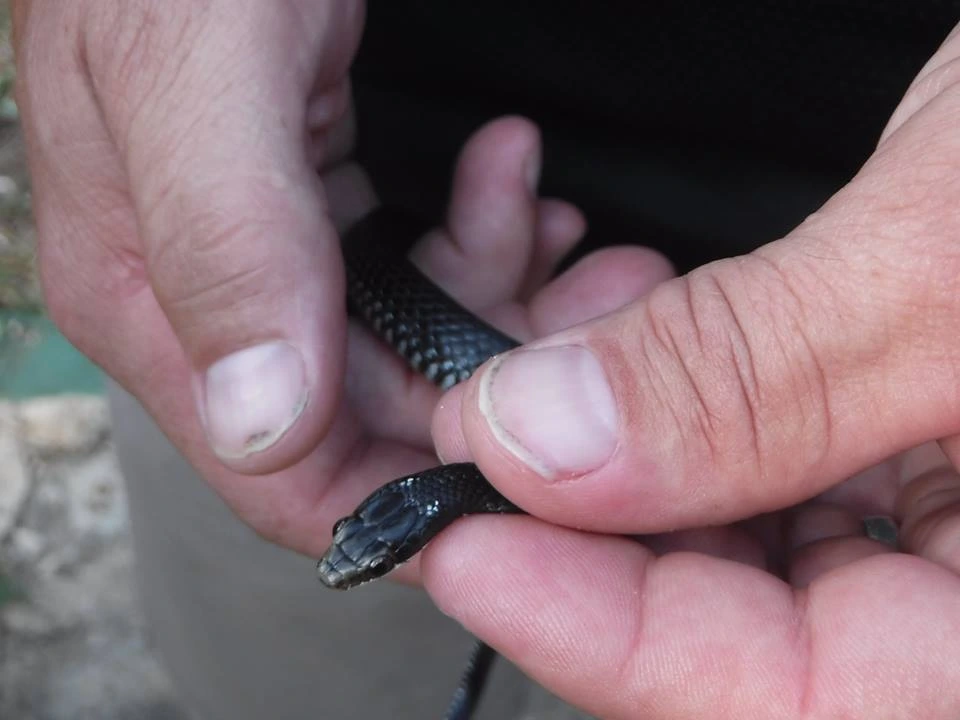
Caraiba andreae. Held animal with head visible. Original observation dated 2016-12-17. No additional geographic occurrence is inferred.

001 · Colubridae

Cuban Lesser Racer, Black and white Racer

Caraiba andreae

(REINHARDT & LÜTKEN, 1862)

Venom unknownNot yet assessed

The checked taxonomic distribution account explicitly lists Cuba. Country-level evidence does not establish continuous occupancy or a complete national inventory. The treatment names these subdivisions in its Cuba distribution clause: Camagüey, Camaguey. They are assigned to the declared atlas navigation groups; this is not a field observation, a…

Read the species account →

José Garrido · CC BY 4.0 · https://creativecommons.org/licenses/by/4.0/
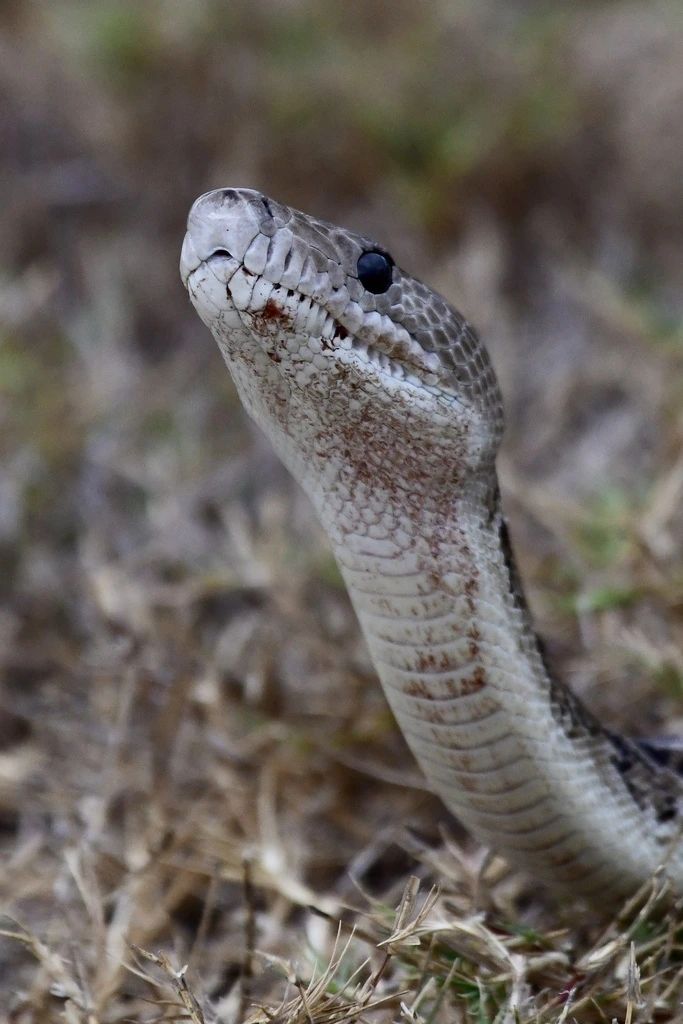
Chilabothrus angulifer. Close view of raised head and neck. Original observation dated 2023-03-15. No additional geographic occurrence is inferred.

002 · Boidae

Cuban Boa

Chilabothrus angulifer

(COCTEAU & BIBRON, 1840)

Non-venomous

The checked taxonomic distribution account explicitly lists Cuba. Country-level evidence does not establish continuous occupancy or a complete national inventory. The treatment names these subdivisions in its Cuba distribution clause: Camagüey, Camaguey. They are assigned to the declared atlas navigation groups; this is not a field observation, a…

Read the species account →

Robin White · CC BY 4.0 · https://creativecommons.org/licenses/by/4.0/
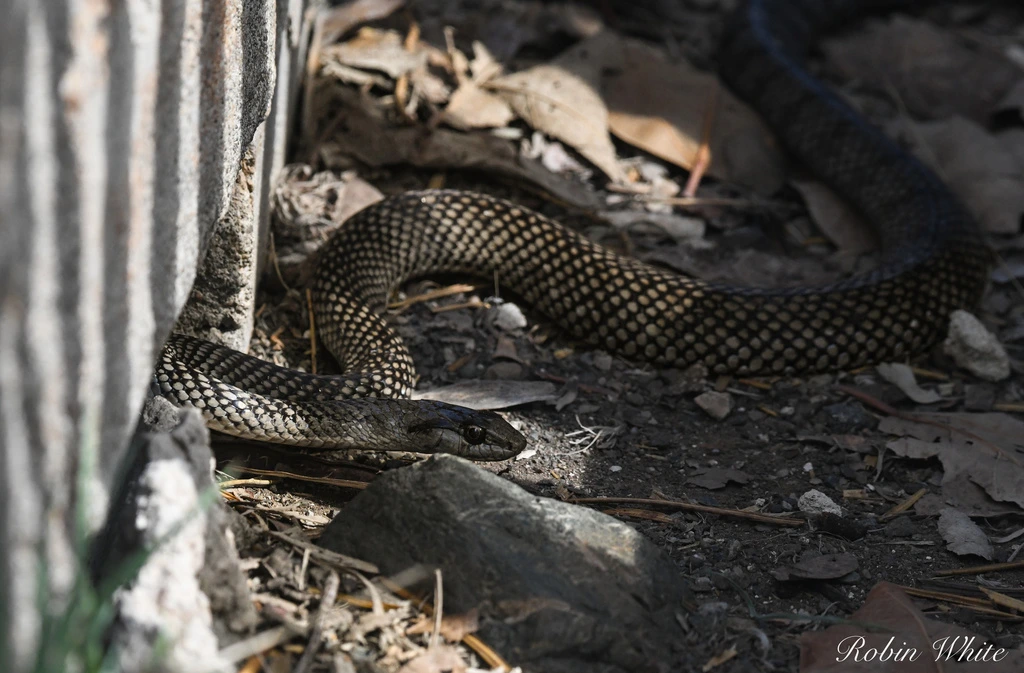
Cubophis cantherigerus. Whole animal beside a wall; original photographer watermark retained. Original observation dated 2023-11-09. No additional geographic occurrence is inferred.

003 · Colubridae

Cuban Racer

Cubophis cantherigerus

(BIBRON, 1843)

Venom unknownNot yet assessed

The checked taxonomic distribution account explicitly lists Cuba. Country-level evidence does not establish continuous occupancy or a complete national inventory. The treatment names these subdivisions in its Cuba distribution clause: Guantánamo, Guantanamo. They are assigned to the declared atlas navigation groups; this is not a field observation, a…

Read the species account →

Robin White · CC BY 4.0 · https://creativecommons.org/licenses/by/4.0/
TropidophiidaeTropidophisPhotograph not yet documented

004 · Tropidophiidae

CUBAN DUSKY TROPE

Tropidophis fuscus

HEDGES & GARRIDO, 1992

Venom unknownNot yet assessed

The checked taxonomic distribution account explicitly lists Cuba. Country-level evidence does not establish continuous occupancy or a complete national inventory. The treatment names these subdivisions in its Cuba distribution clause: Holguín, Guantánamo, Holguin, Guantanamo. They are assigned to the declared atlas navigation groups; this is not a field…

Read the species account →
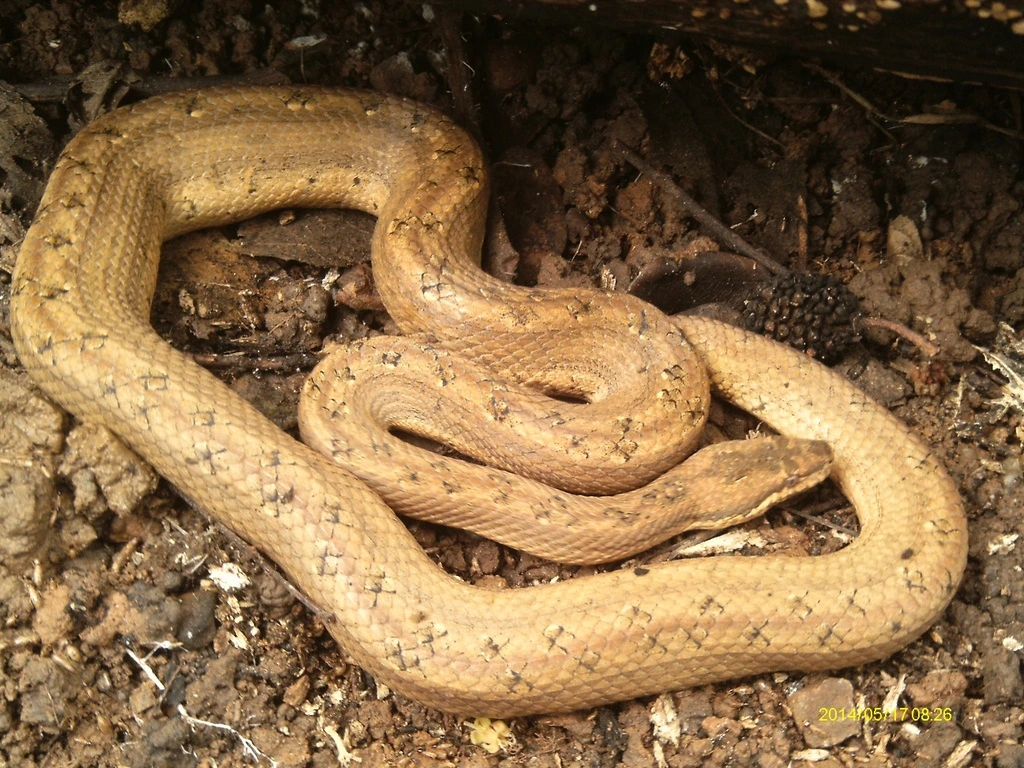
Tropidophis melanurus. Coiled animal in soil and leaf litter. Original observation dated 2014-05-17. No additional geographic occurrence is inferred.

005 · Tropidophiidae

Giant Trope, Wood Snake

Tropidophis melanurus

(SCHLEGEL, 1837)

Venom unknownNot yet assessed

The checked taxonomic distribution account explicitly lists Cuba. Country-level evidence does not establish continuous occupancy or a complete national inventory.

Read the species account →

Dayron Breto · CC BY 4.0 · https://creativecommons.org/licenses/by/4.0/
TropidophiidaeTropidophisPhotograph not yet documented

006 · Tropidophiidae

Oriente White-necked Trope, Pilsbry's Dwarf Boa

Tropidophis pilsbryi

BAILEY, 1937

Venom unknownNot yet assessed

The checked taxonomic distribution account explicitly lists Cuba. Country-level evidence does not establish continuous occupancy or a complete national inventory. The treatment names these subdivisions in its Cuba distribution clause: Santiago de Cuba, Guantánamo, Guantanamo. They are assigned to the declared atlas navigation groups; this is not a field…

Read the species account →
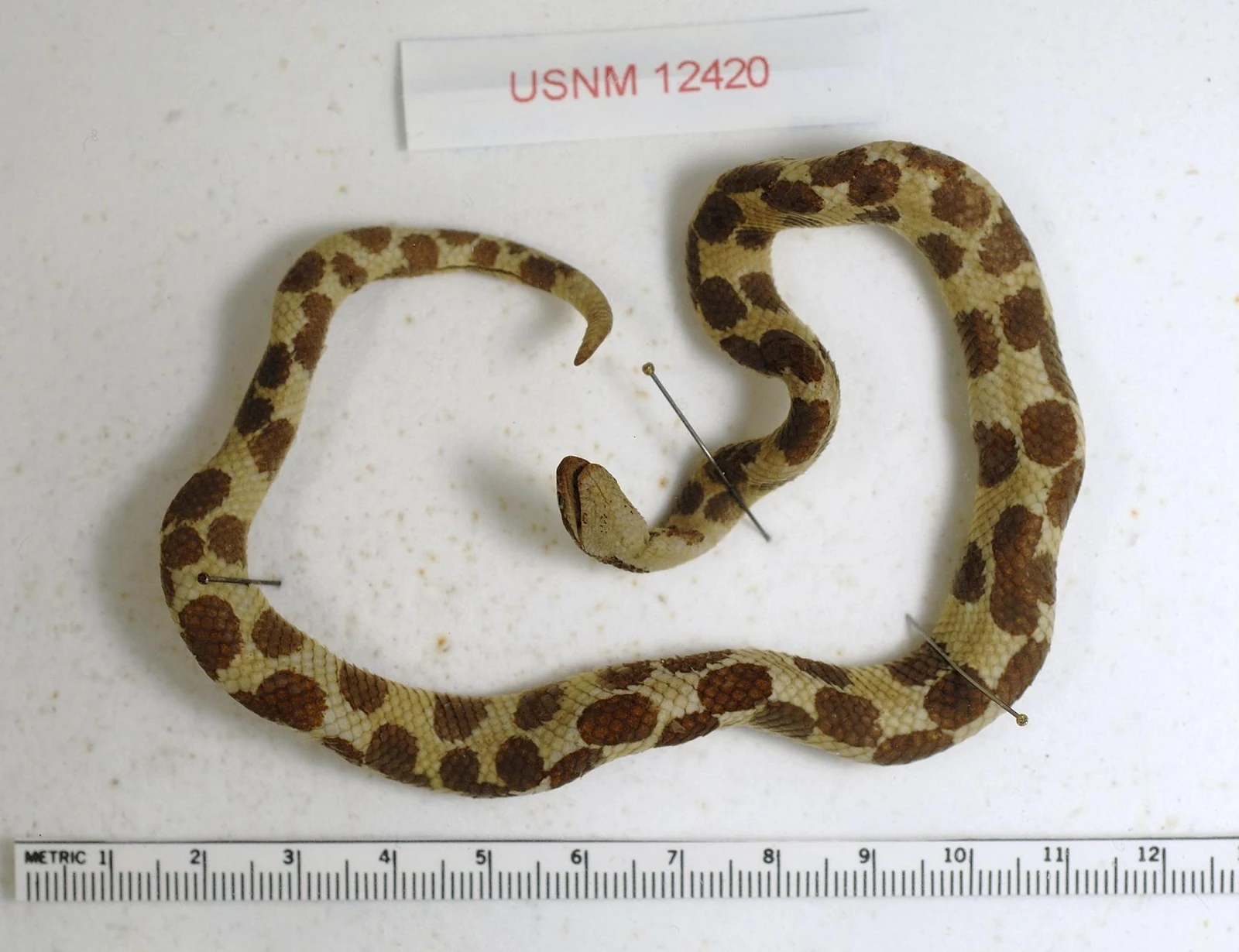
Tropidophis wrighti. Preserved museum specimen, Smithsonian National Museum of Natural History, USNM 12420. Colours may have changed in preservative. This collection image adds no geographic occurrence record.

007 · Tropidophiidae

Gracile Banded Trope, Wright's Dwarf Boa

Tropidophis wrighti

STULL, 1928

Venom unknownNot yet assessed

The checked taxonomic distribution account explicitly lists Cuba. Country-level evidence does not establish continuous occupancy or a complete national inventory.

Read the species account →

Welch, Jenna L. · CC0 1.0 · https://creativecommons.org/publicdomain/zero/1.0/

All 45 species in the country collection →

Read further

Evidence & sources.

Guide reviewed 16 October 2026. Source dates and geographic scope matter; landscape photographs do not establish species occurrence.

  1. Convention on Biological Diversity · Cuba national profile

    Historical Secretariat draft, pending Party approval. Landscape context only; dated statistics and projections are not presented as current measurements. Checked 16 October 2026.

Continue through Cuba

Explore another habitat.

01

Highland environments

Mountains form a separate component of Cuba’s landscape mosaic. The atlas groups provinces for navigation; these groups are not elevation belts.

02

Mangroves & estuaries

The national profile documents extensive mangrove environments and both natural and human pressures. Historic coverage figures are not reused as current measurements.