Removal of shore vegetation
Retaining sand-stabilising vegetation is a practical priority supported by the Forestry Department’s account of beach-forest function.
Brunei · Habitat field guide
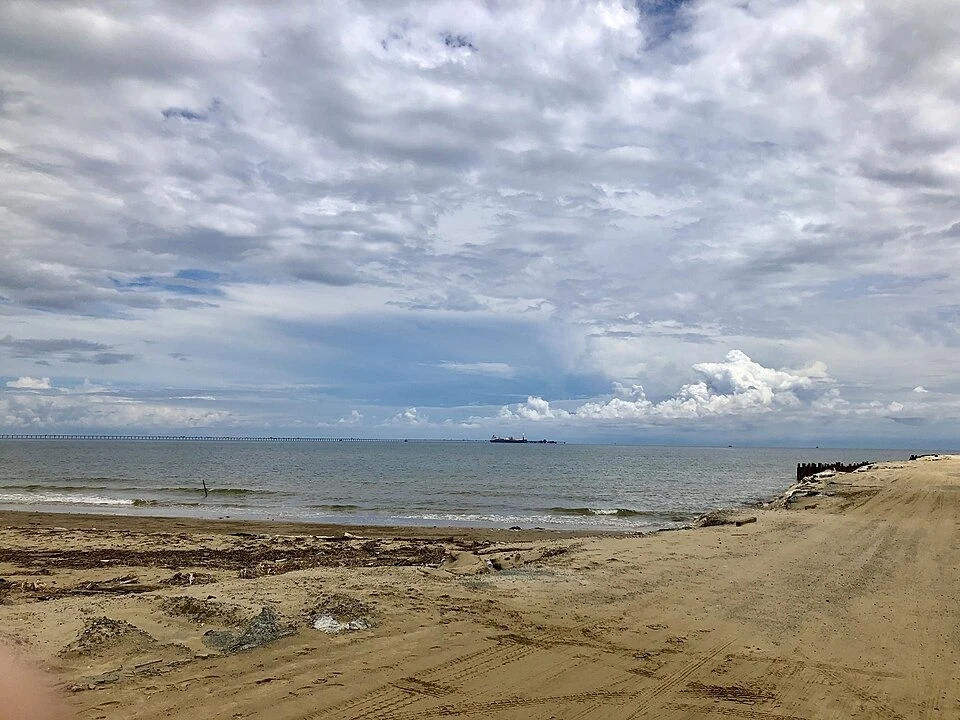
The exposed coast differs from the sheltered mangroves of Brunei Bay. Beach vegetation above high tide is part of the habitat, not just scenery behind the sand.
Sungai Liang Beach and the South China Sea, Brunei.
Understanding the environment
The exposed coast differs from the sheltered mangroves of Brunei Bay. Beach vegetation above high tide is part of the habitat, not just scenery behind the sand.
Explore the structure · Explore three connected parts of this landscape.
Select a zone to see what changes.
Above high water
Describe beach vegetation, rock or developed land behind the shore.
A coastal locality can include several terrestrial habitats.
A conceptual reading guide, not a measured transect, access route or snake occurrence map.
Sources: Brunei Forestry Department · Beach forest · Brunei Tourism · Seri Kenangan Beach
Field notes · 01
The Forestry Department places beach forest on sandy ground above the high-water mark, along the coast from Muara toward Tutong and Kuala Belait. It describes vegetation adapted to wind and salt exposure and a role in stabilising the shore.
Field notes · 02
At Seri Kenangan, a narrow strip separates the Tutong River from the South China Sea. Compare the river-facing margin with the exposed beach. The view makes a useful habitat contrast without implying that the two sides support identical snake assemblages.
Sources: Brunei Tourism · Seri Kenangan Beach
Pressures on Brunei’s habitats
Retaining sand-stabilising vegetation is a practical priority supported by the Forestry Department’s account of beach-forest function.
Forest policy includes coastal land and ecological functions in management decisions. Assess facilities and access against the habitat present, rather than assuming an empty-looking beach has little value.
Sources: Brunei Forestry Department · National Forest Policy
Keep backshore vegetation and river-mouth connections in coastal planning. Offshore species and reef claims require separate marine evidence.
The connected collection
These 16 species have supported country occurrence and an explicit habitat association in the shared account. The association may come from elsewhere in their range. This is not a complete local habitat inventory; the places above are landscape examples, not asserted collecting sites.
16 species · showing 16
001 · Acrochordidae
Little filesnake
The national checklist of Ahmad Sah et al. (published July 2026) includes this taxon for Brunei. The checklist combines historical literature with observations from 2021–2025; inclusion is not a claim of a recent sighting.
Read the species account →Mario Lutz · Copyright Mario Lutz. Authorised for display in this atlas; no third-party reuse licence granted.
002 · Elapidae
Spine-tailed seasnake
The national checklist of Ahmad Sah et al. (published July 2026) includes this taxon for Brunei. The checklist combines historical literature with observations from 2021–2025; inclusion is not a claim of a recent sighting.
Read the species account →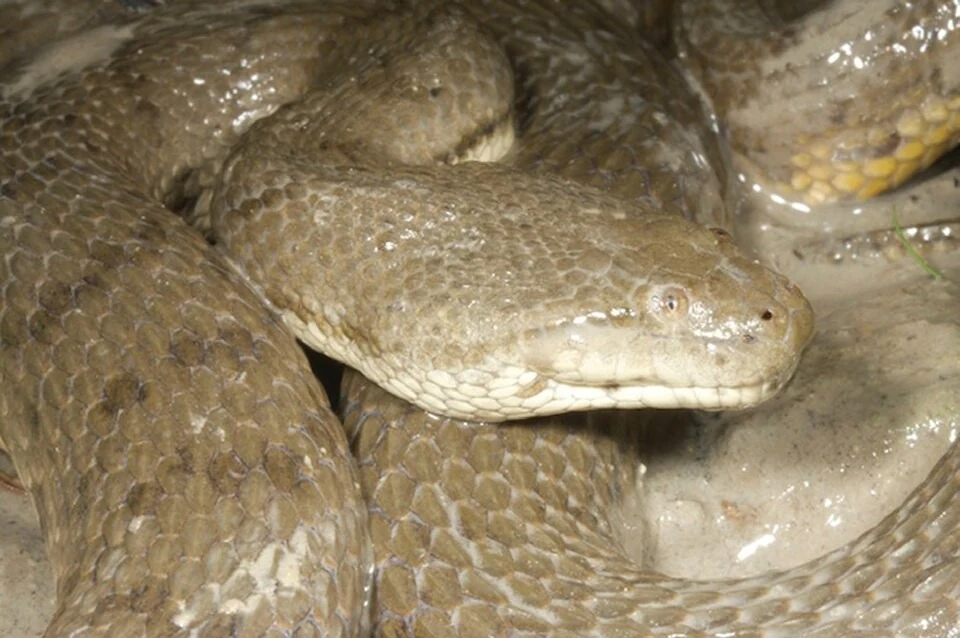
003 · Homalopsidae
Southeast Asian Bockadam
The national checklist of Ahmad Sah et al. (published July 2026) includes this taxon for Brunei. The checklist combines historical literature with observations from 2021–2025; inclusion is not a claim of a recent sighting.
Read the species account →Mark O’Shea · CC BY 3.0 · https://creativecommons.org/licenses/by/3.0
004 · Elapidae
Bighead Sea Snake
The national checklist of Ahmad Sah et al. (published July 2026) includes this taxon for Brunei. The checklist combines historical literature with observations from 2021–2025; inclusion is not a claim of a recent sighting. P. 109: historical voucher UBD655, published as Kolpophis annandalei.
Read the species account →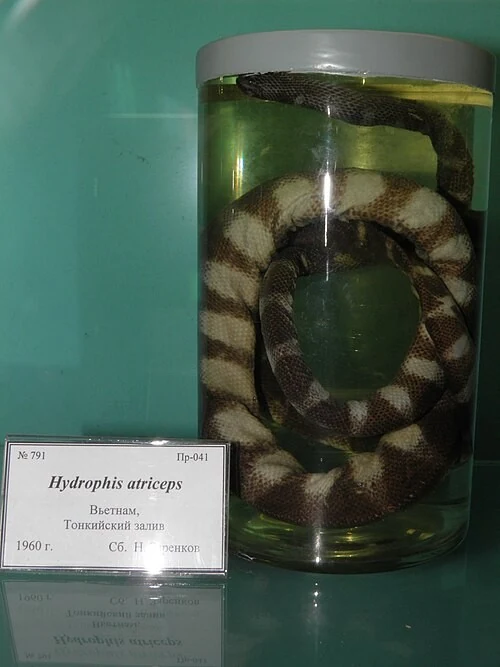
005 · Elapidae
Black-headed seasnake
The national checklist of Ahmad Sah et al. (published July 2026) includes this taxon for Brunei. The checklist combines historical literature with observations from 2021–2025; inclusion is not a claim of a recent sighting.
Read the species account →A. C. Tatarinov · CC0 · https://creativecommons.org/publicdomain/zero/1.0/deed.en
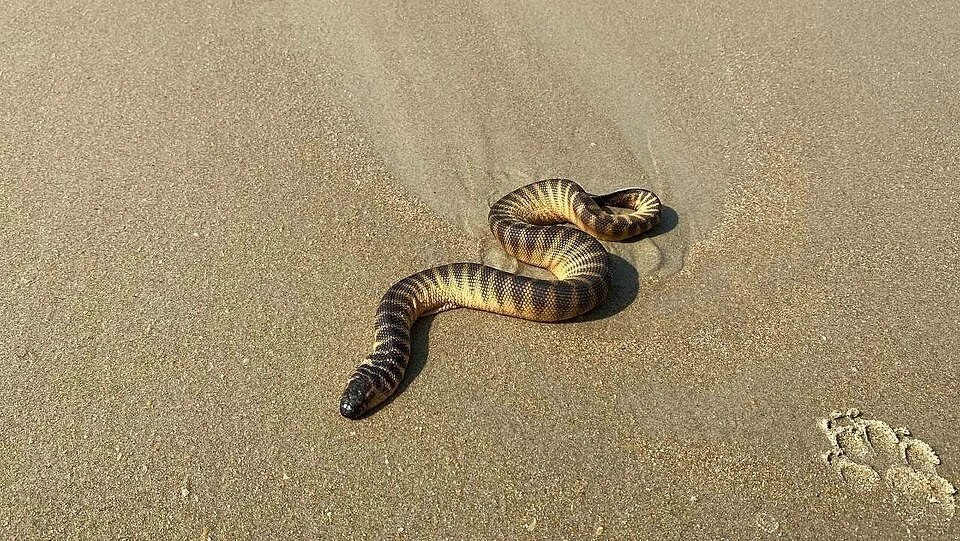
006 · Elapidae
Shaw's Sea Snake
The national checklist of Ahmad Sah et al. (published July 2026) includes this taxon for Brunei. The checklist combines historical literature with observations from 2021–2025; inclusion is not a claim of a recent sighting.
Read the species account →Светлана Царахова · CC0 · https://creativecommons.org/publicdomain/zero/1.0/deed.en
007 · Elapidae
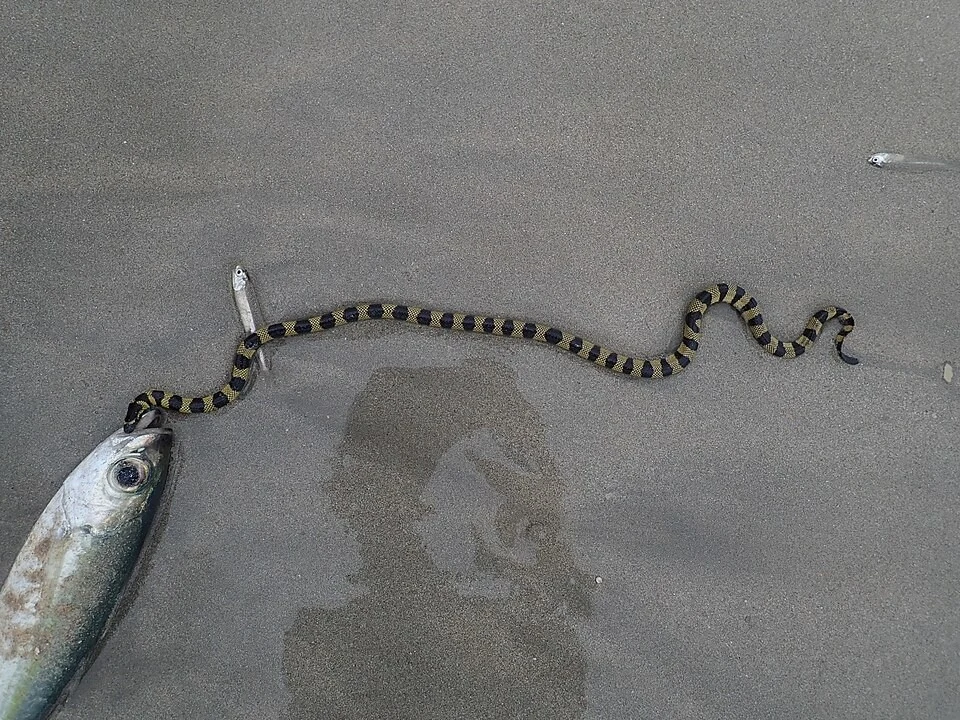
Annulated Sea Snake
The national checklist of Ahmad Sah et al. (published July 2026) includes this taxon for Brunei. The checklist combines historical literature with observations from 2021–2025; inclusion is not a claim of a recent sighting. P. 108: historical voucher BM11.1992 specifies only Belait District, without an exact coastal capture point.
Read the species account →evannazareth · CC BY 4.0 · https://creativecommons.org/licenses/by/4.0
008 · Elapidae
Saddle-backed sea snake
The national checklist of Ahmad Sah et al. (published July 2026) includes this taxon for Brunei. The checklist combines historical literature with observations from 2021–2025; inclusion is not a claim of a recent sighting.
Read the species account →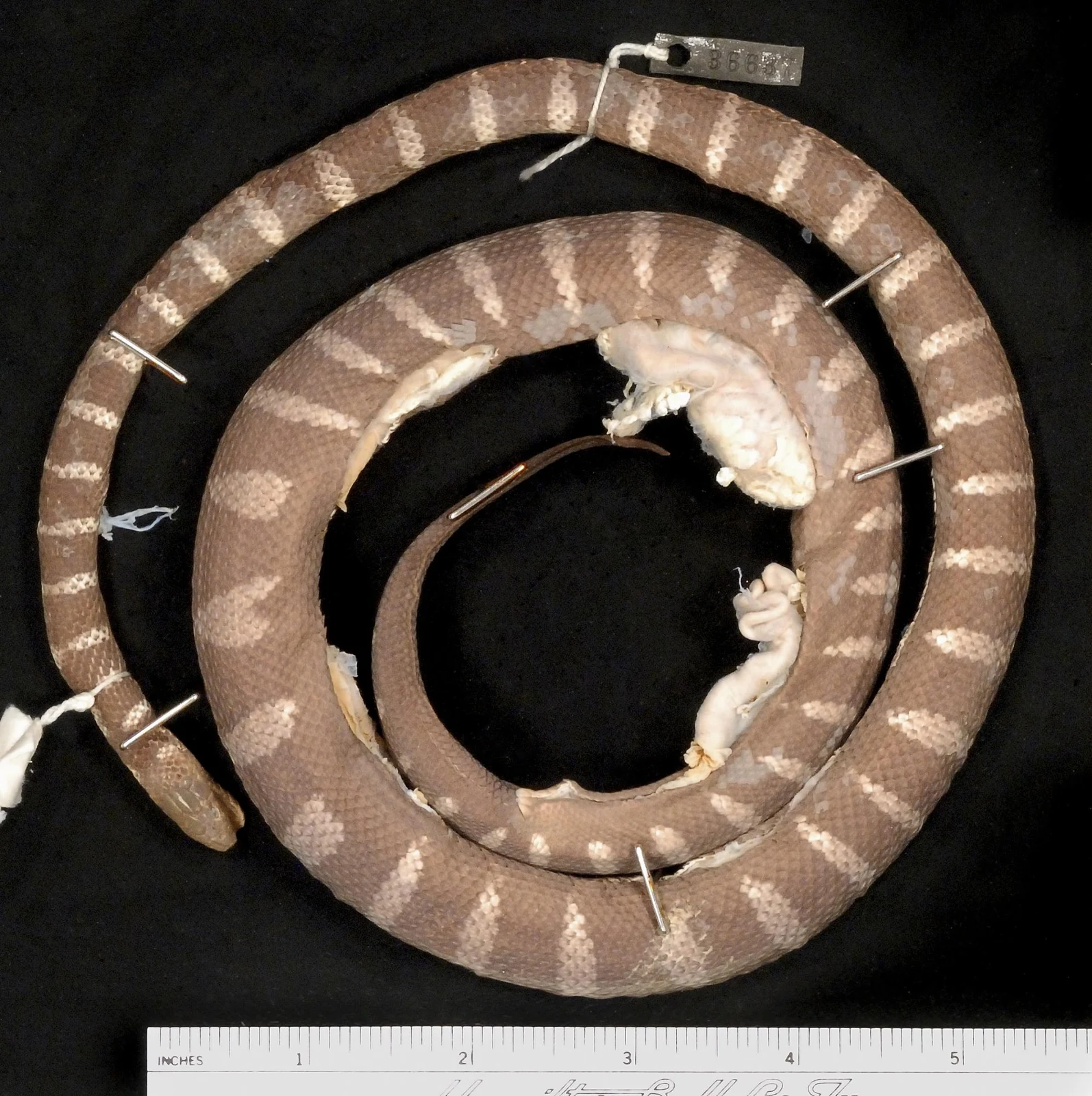
009 · Elapidae
Black-banded
The national checklist of Ahmad Sah et al. (published July 2026) includes this taxon for Brunei. The checklist combines historical literature with observations from 2021–2025; inclusion is not a claim of a recent sighting.
Read the species account →Brittany Rogers · CC0 1.0 · https://creativecommons.org/publicdomain/zero/1.0/
010 · Elapidae
Ornate Reef seasnake
The national checklist of Ahmad Sah et al. (published July 2026) includes this taxon for Brunei. The checklist combines historical literature with observations from 2021–2025; inclusion is not a claim of a recent sighting.
Read the species account →harum.koh from Kobe city, Japan · CC BY-SA 2.0 · https://creativecommons.org/licenses/by-sa/2.0
011 · Elapidae
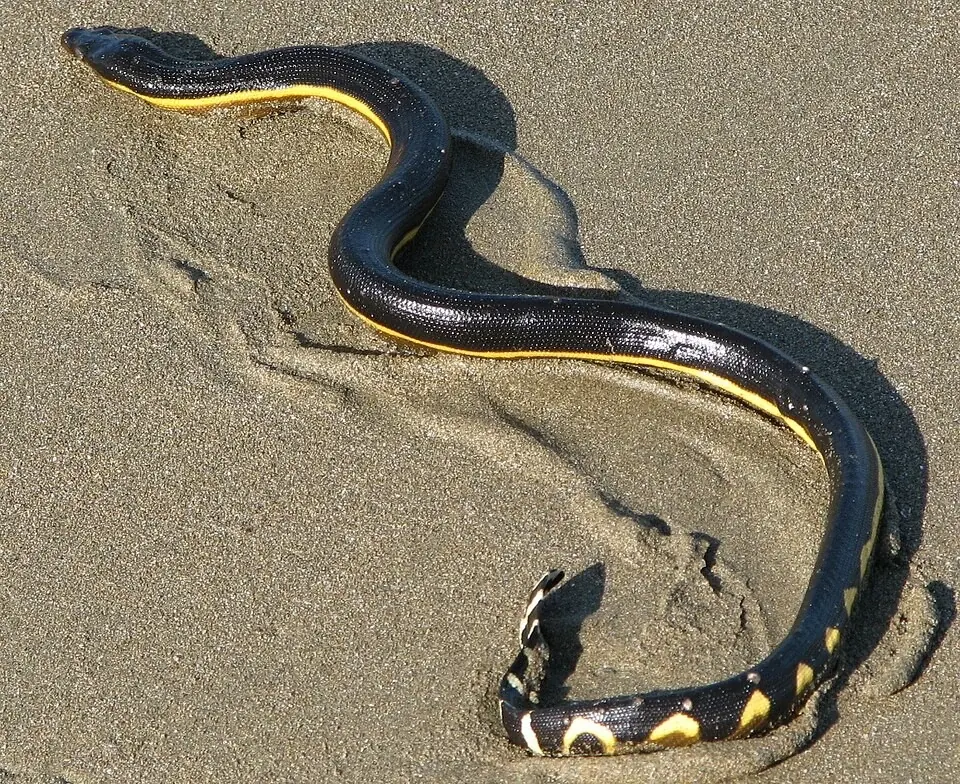
Yellowbelly Sea Snake
The national checklist of Ahmad Sah et al. (published July 2026) includes this taxon for Brunei. The checklist combines historical literature with observations from 2021–2025; inclusion is not a claim of a recent sighting. P. 110: historical voucher BM314.1984, published as Pelamis platura, represents a suspected stranding, not evidence of inland residency.
Read the species account →Aloaiza · CC BY 3.0 · https://creativecommons.org/licenses/by/3.0
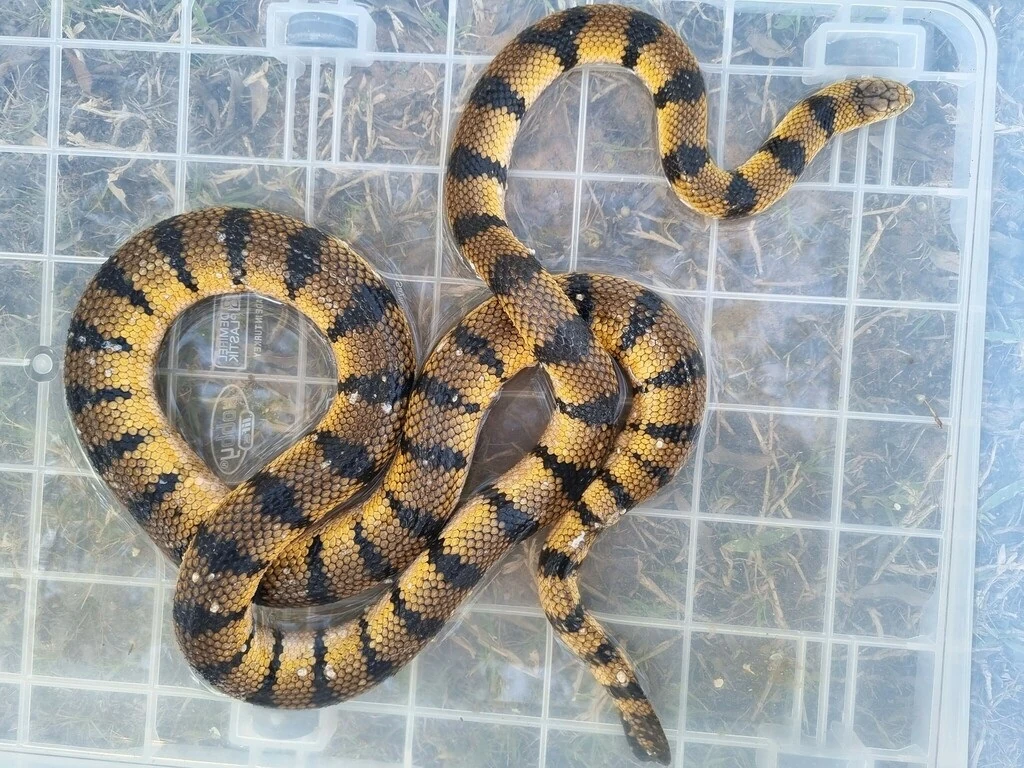
012 · Elapidae
Yellow Sea Snake
The national checklist of Ahmad Sah et al. (published July 2026) includes this taxon for Brunei. The checklist combines historical literature with observations from 2021–2025; inclusion is not a claim of a recent sighting.
Read the species account →Marius Burger · CC0 1.0 · https://creativecommons.org/publicdomain/zero/1.0/
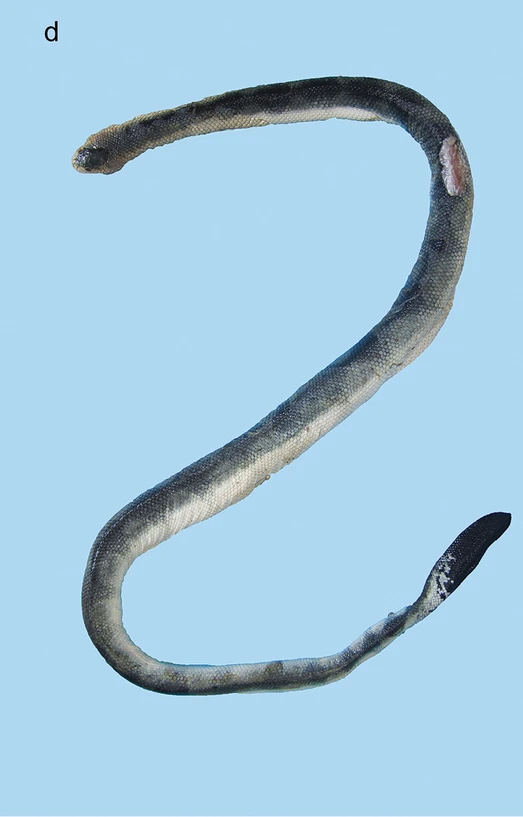
013 · Elapidae
Viperine Sea Snake
The national checklist of Ahmad Sah et al. (published July 2026) includes this taxon for Brunei. The checklist combines historical literature with observations from 2021–2025; inclusion is not a claim of a recent sighting.
Read the species account →Rezaie-Atagholipour, Mohsen; Ghezellou, Parviz; Hesni, Majid Askari; Dakhteh, Seyyed Mohammad Hashem; Ahmadian, Hooman; Vidal, Nicolas · CC BY 4.0 · https://creativecommons.org/licenses/by/4.0/
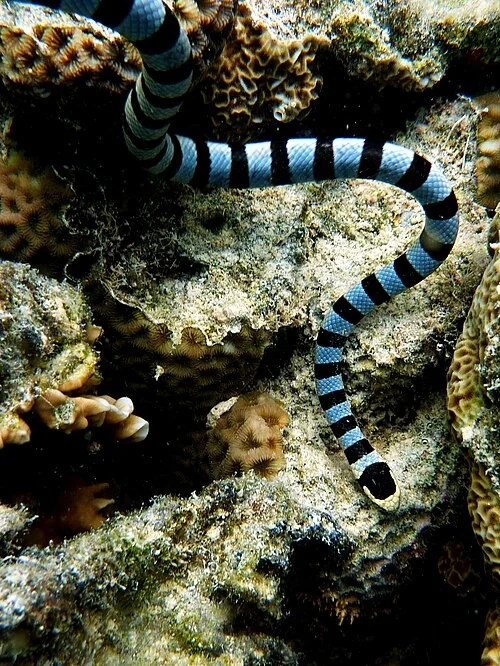
014 · Elapidae
Yellow-lipped sea krait
The national checklist of Ahmad Sah et al. (published July 2026) includes this taxon for Brunei. The checklist combines historical literature with observations from 2021–2025; inclusion is not a claim of a recent sighting. P. 109: historical vouchers BM04.1992, UBD328–329, BM14.1976 and BM50.1992.
Read the species account →Kai Squires · CC BY 4.0 · https://creativecommons.org/licenses/by/4.0
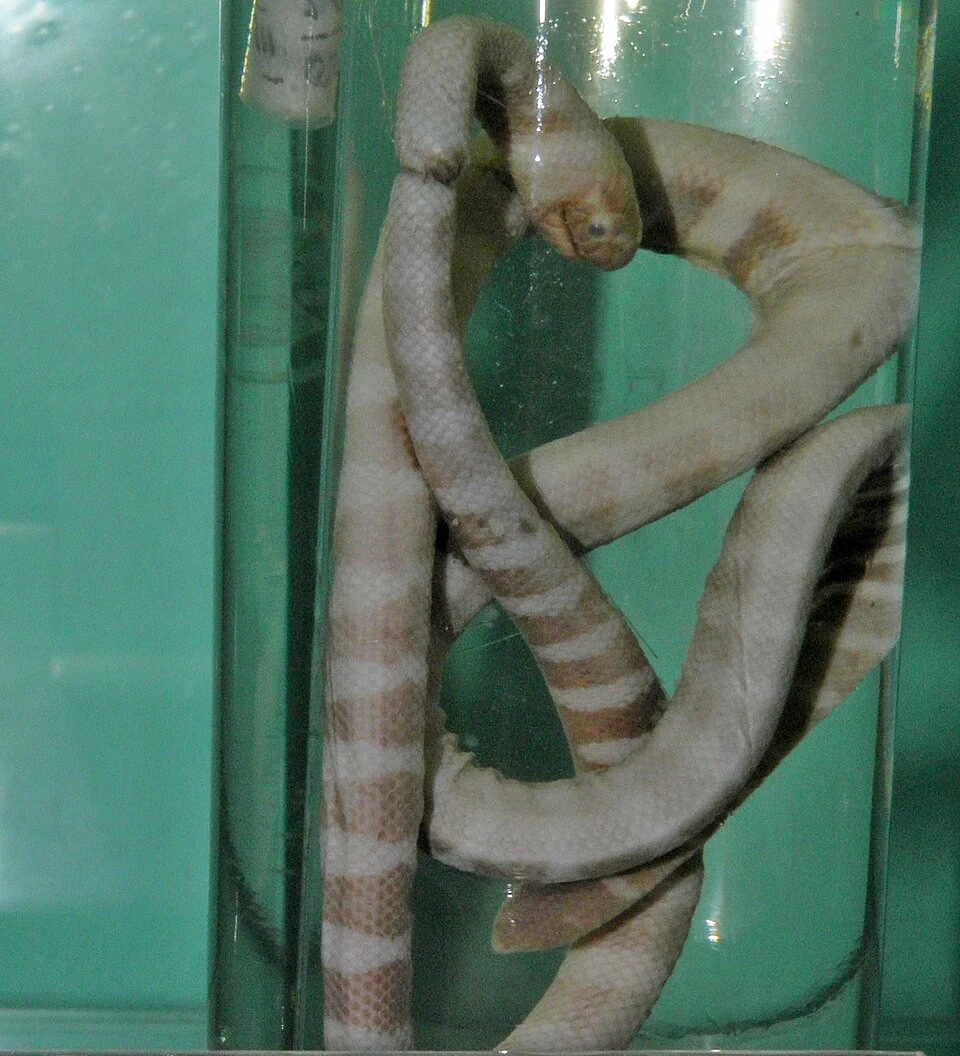
015 · Elapidae
Narrow-headed sea snake
The national checklist of Ahmad Sah et al. (published July 2026) includes this taxon for Brunei. The checklist combines historical literature with observations from 2021–2025; inclusion is not a claim of a recent sighting.
Read the species account →A. C. Tatarinov · CC0 · https://creativecommons.org/publicdomain/zero/1.0/deed.en
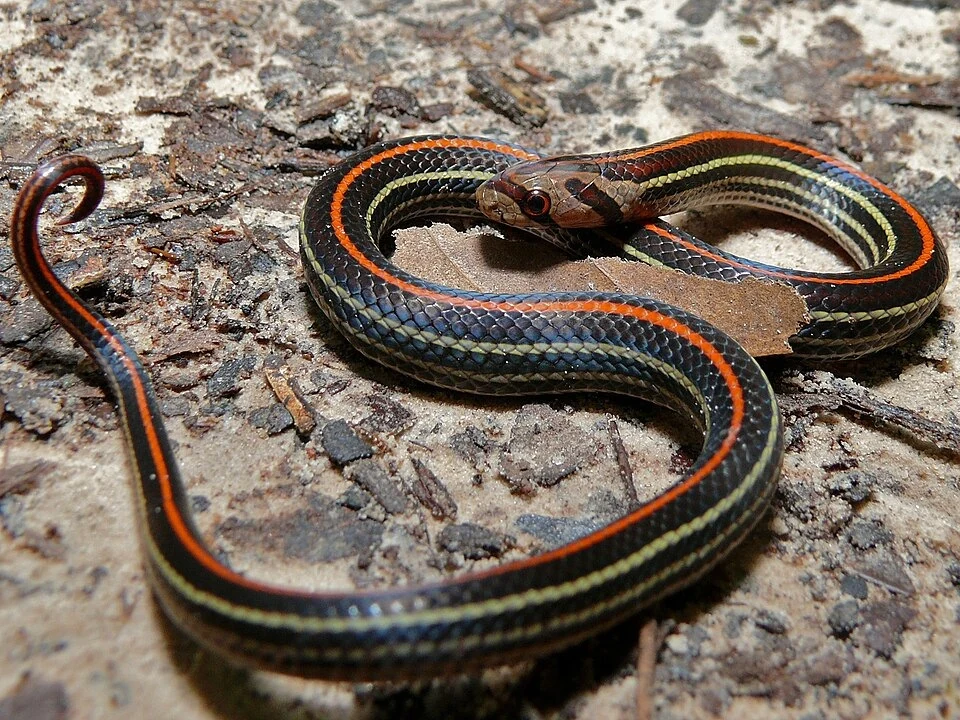
016 · Colubridae
(Eight-) Striped Kukri Snake
The national checklist of Ahmad Sah et al. (published July 2026) includes this taxon for Brunei. The checklist combines historical literature with observations from 2021–2025; inclusion is not a claim of a recent sighting. Its separate Ulu Temburong National Park column is positive, supporting a named Temburong locality, not occurrence throughout the…
Read the species account →Bernard DUPONT from FRANCE · CC BY-SA 2.0 · https://creativecommons.org/licenses/by-sa/2.0
Read further
Guide reviewed 11 October 2026. Source dates and geographic scope matter; landscape photographs do not establish species occurrence.
This official URL is misleadingly named: its actual page is Beach Type, describing sand-based vegetation above high tide.
Sand spit separating the Tutong River from the South China Sea.
Sandy coastal site in Brunei-Muara, not an offshore species survey.
Land, terrain, ecological and hydrological considerations. Used for management priorities, not to claim an observed local impact.
Continue through Brunei
Brunei’s forest is not one vegetation type. Begin by separating mixed dipterocarp woodland from swamp, coastal and mountain formations.
02Brunei has genuine upland forest gradients. The southern Temburong mountains deserve their own habitat account, distinct from the better-known lowland visitor routes.
03Blackwater lakes, riverine freshwater forest and peat swamp form different parts of Brunei’s wet landscape. Water colour alone cannot identify which one is present.
04Inner Brunei Bay and the lower rivers hold a diverse tidal forest. The transition from salty channels to landward vegetation is a useful way to read it.