Conservation context
BAS describes specialized polar wildlife; follow current site guidance and prevent disturbance or species introductions.
Sources: Australian Antarctic Program · Plants and microbes · British Antarctic Survey · Antarctic wildlife
Antarctica · Habitat field guide
The Peninsula’s maritime climate is comparatively favourable to mosses and other small terrestrial communities.
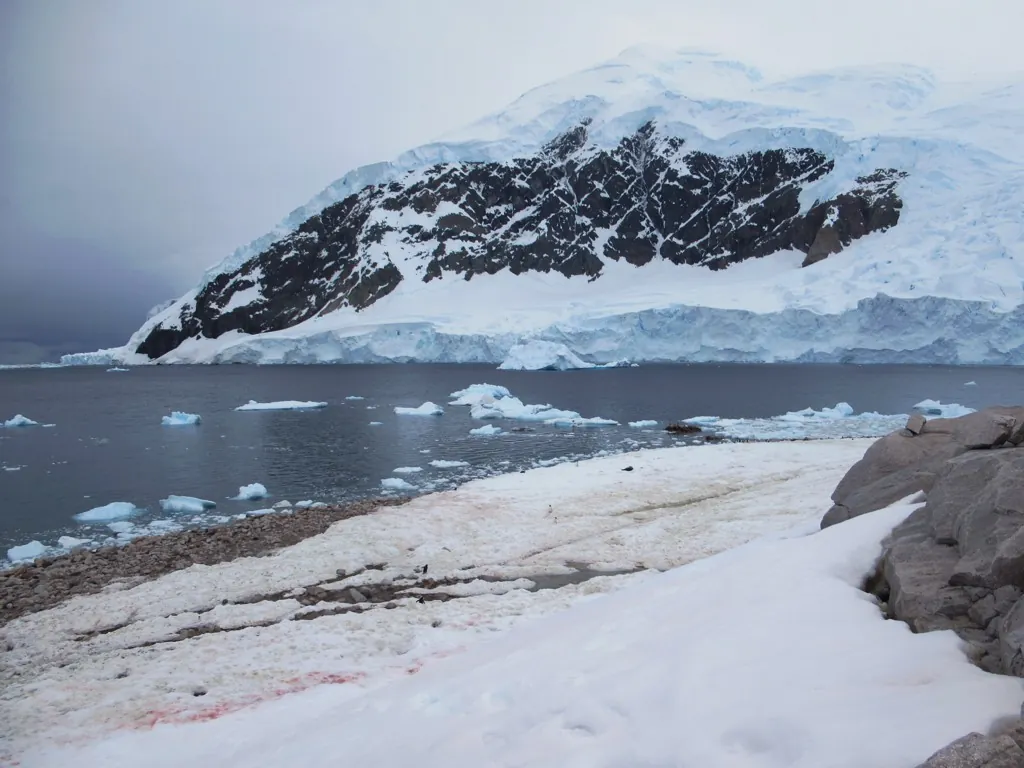
Neko Harbour in Andvord Bay, Antarctic Peninsula: snowy shoreline, open water and coastal mountains.
Understanding the environment
The Peninsula’s maritime climate is comparatively favourable to mosses and other small terrestrial communities.
Explore the structure · Read the named setting from landform to vegetation and water.
Select a zone to see what changes.
Exposed patches
Limited terrestrial vegetation occurs on suitable ground.
This cue describes the named landscape, without adding animal occurrence evidence.
Conceptual reading guide, not a scale map, species range or field transect.
Sources: Australian Antarctic Program · Plants and microbes · British Antarctic Survey · Antarctic wildlife
Field notes · 01
The Peninsula’s maritime climate is comparatively favourable to mosses and other small terrestrial communities.
Ice-free coastal patches lie beside cold marine waters and seasonal ice.
Sources: Australian Antarctic Program · Plants and microbes · British Antarctic Survey · Antarctic wildlife
Field notes · 02
The place named here is an example within this territory. Habitat resemblance and a photograph do not establish a snake record; any future species entry needs separately reviewed locality evidence.
Sources: Australian Antarctic Program · Plants and microbes · British Antarctic Survey · Antarctic wildlife
Pressures on Antarctica’s habitats
BAS describes specialized polar wildlife; follow current site guidance and prevent disturbance or species introductions.
Sources: Australian Antarctic Program · Plants and microbes · British Antarctic Survey · Antarctic wildlife
Follow the responsible authority’s site protection and biosecurity guidance; check current access separately from this geographic account.
The connected collection
These 0 species have supported country occurrence and an explicit habitat association in the shared account. The association may come from elsewhere in their range. This is not a complete local habitat inventory; the places above are landscape examples, not asserted collecting sites.
No species-level association has yet been resolved for this habitat in the collection. That does not mean snakes are absent.
0 species · showing 0
Try another name or clear the filters. Absence from a regional list does not establish absence in nature.
Read further
Guide reviewed 2026-10-28. Source dates and geographic scope matter; landscape photographs do not establish species occurrence.
Maritime versus continental environments; vegetation on exposed ground and near meltwater.
Explicit statement that naturally occurring reptiles are absent from the Antarctic continent.
Continue through Antarctica