Pressures in the source record
Habitat conversion, overuse and pollution are documented historical pressures. These are background concerns, not an assessment of the photographed point today.
Sources: CBD · Yemen national profile (draft)
Yemen · Habitat field guide
Explore the documented landscape around Socotra archipelago. The named example anchors this guide; the country map and separately sourced species accounts answer different questions.
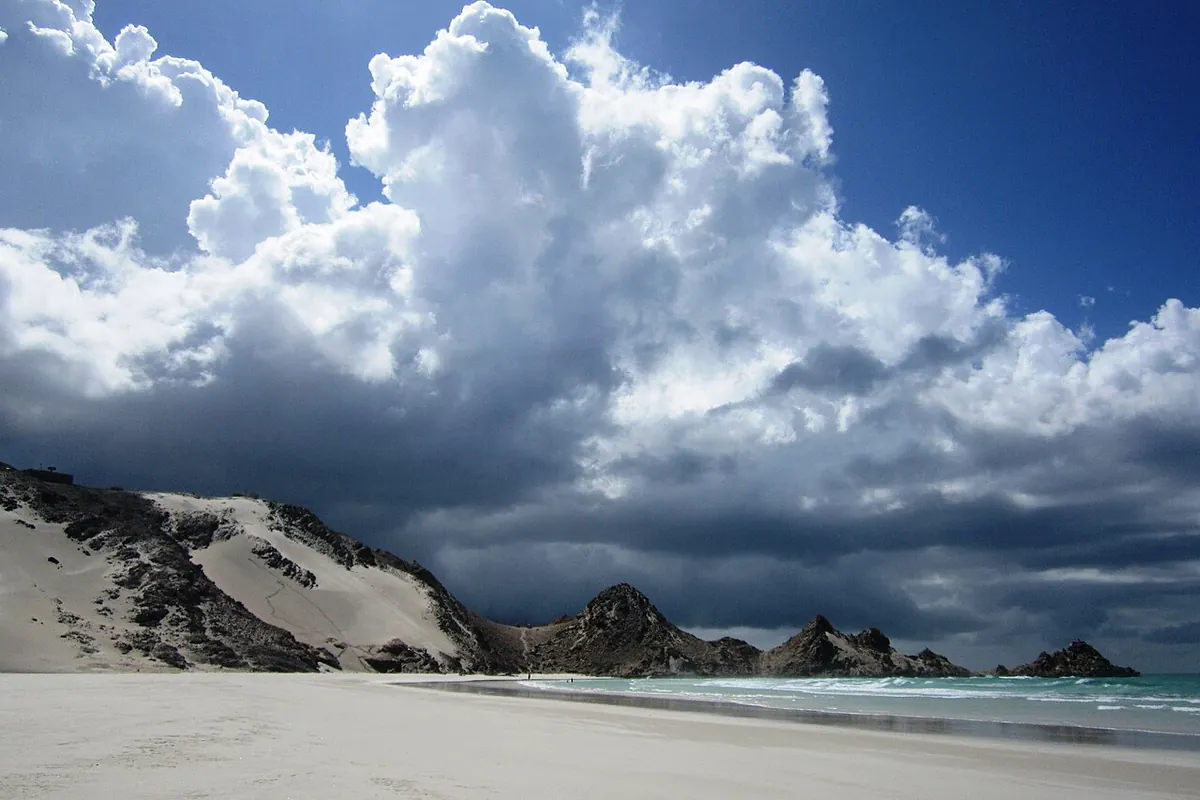
Sand, dunes and coastal water at Detwah Lagoon near Qalansiyah on Socotra, Yemen.
Understanding the environment
Explore the documented landscape around Socotra archipelago. The named example anchors this guide; the country map and separately sourced species accounts answer different questions.
Explore the structure · Landward edge → shore → shallow water
Select a zone to see what changes.
Vegetation and development
Separate planted or developed ground from natural dune, scrub or forest margins. The image caption identifies the photographed place.
Compare this unit with the documented local setting and keep the observation date, exact place and source distinct.
These panels are a conceptual reading sequence, not a mapped transect or a recommendation to enter the site.
Sources: UNESCO · Socotra
Field notes · 01
Socotra's islands lie in the northwestern Indian Ocean near the Gulf of Aden. The heritage account describes a distinctive island and marine setting; reef, beach and rocky coast should remain separate local habitat descriptions.
Sources: UNESCO · Socotra
Field notes · 02
A coastline is a sequence of environments. Record rock, beach, mudflat, vegetation and sheltered water separately, together with the tidal stage when known. A resort frontage and an undeveloped shore may share a bay but should not share an ecological description.
Pressures on Yemen’s habitats
Habitat conversion, overuse and pollution are documented historical pressures. These are background concerns, not an assessment of the photographed point today.
Sources: CBD · Yemen national profile (draft)
When revisiting an image or locality, compare the same season, water stage and viewing area before interpreting a change. Keep source dates visible.
Use the country and region maps to orient the landscape, then read each species profile for its independently reviewed habitat and range evidence. Similar scenery does not establish a shared species list.
The connected collection
These 0 species have supported country occurrence and an explicit habitat association in the shared account. The association may come from elsewhere in their range. This is not a complete local habitat inventory; the places above are landscape examples, not asserted collecting sites.
No species-level association has yet been resolved for this habitat in the collection. That does not mean snakes are absent.
0 species · showing 0
Try another name or clear the filters. Absence from a regional list does not establish absence in nature.
Read further
Guide reviewed 11 October 2026. Source dates and geographic scope matter; landscape photographs do not establish species occurrence.
Historical national overview marked draft by the Secretariat; broad pressures and landscape context, not a current local condition survey, current statistics or wildlife locality evidence.
Named landscape, vegetation or hydrological setting only; no snake occurrence inferred. Historical site accounts are not current condition or access assessments.
Continue through Yemen
Explore the documented landscape around Socotra woodland. The named example anchors this guide; the country map and separately sourced species accounts answer different questions.
02Explore the documented landscape around Jabal Haraz. The named example anchors this guide; the country map and separately sourced species accounts answer different questions.
03Explore the documented landscape around Socotra dry coastal ground. The named example anchors this guide; the country map and separately sourced species accounts answer different questions.