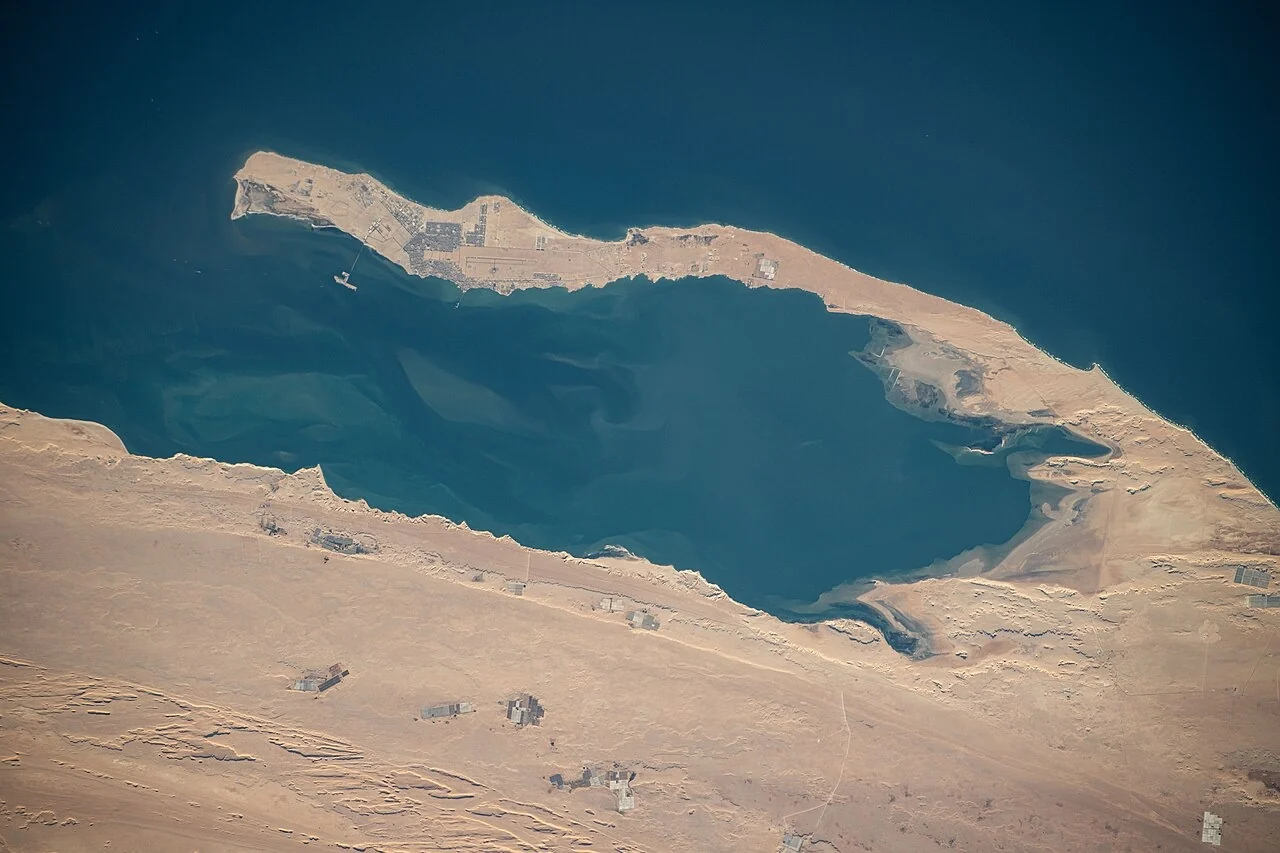
Dakhla Bay, Western Sahara, photographed from the International Space Station on 16 May 2024.

Western Sahara · Habitat field guide

Coasts & marine environments

Dakhla Bay is separated from the Atlantic by a dune peninsula. Its tidal environment differs from the surrounding dry land.

Dakhla Bay, Western Sahara, photographed from the International Space Station on 16 May 2024.

Photograph: NASA Johnson Space Center · Image source · Public domain. Cropped to fill the hero; darkened for text legibility.

Understanding the environment

A sense of the habitat.

Dakhla Bay is separated from the Atlantic by a dune peninsula. Its tidal environment differs from the surrounding dry land.

Geographic scope
Western Sahara; named examples and source scope matter.
Evidence scale
Landscape context is separate from species locality evidence.
Source chronology
Consult the original publication date; checked 12 October 2026.

Explore the structure · Select a layer to compare the details a locality record can preserve.

Read the setting in three layers.

Select a zone to see what changes.

Shore

Shore

Distinguish terrestrial shore records from observations in the water.

Compare this detail with the original field or museum record before assigning a habitat association.

These reading prompts explain how to interpret evidence; they do not assert that every feature occurs at every site.

Sources: Ramsar · Baie d’Ad-Dakhla, 2025 information sheet

Field notes · 01

The documented landscape

Dakhla Bay is separated from the Atlantic by a dune peninsula. Its tidal environment differs from the surrounding dry land.

Sources: Ramsar · Baie d’Ad-Dakhla, 2025 information sheet

Field notes · 02

Connect habitat and locality

Use the species account to check whether a habitat statement applies to this country or elsewhere in the species’ range. A landscape photograph illustrates its own named place; it is not evidence of snake presence.

Pressures on Western Sahara’s habitats

What is at risk?

A site-specific assessment of pressures has not yet been extracted for this guide. The landscape sources below provide context; they do not establish a current threat level for each snake species.

What helps this habitat

Retain natural vegetation and water connections where local conservation evidence supports them. Consult the linked national or site account for the pressures and management actions actually reported there.

The connected collection

Snakes with habitat evidence.

These 3 species have supported country occurrence and an explicit habitat association in the shared account. The association may come from elsewhere in their range. This is not a complete local habitat inventory; the places above are landscape examples, not asserted collecting sites.

3 species · showing 3

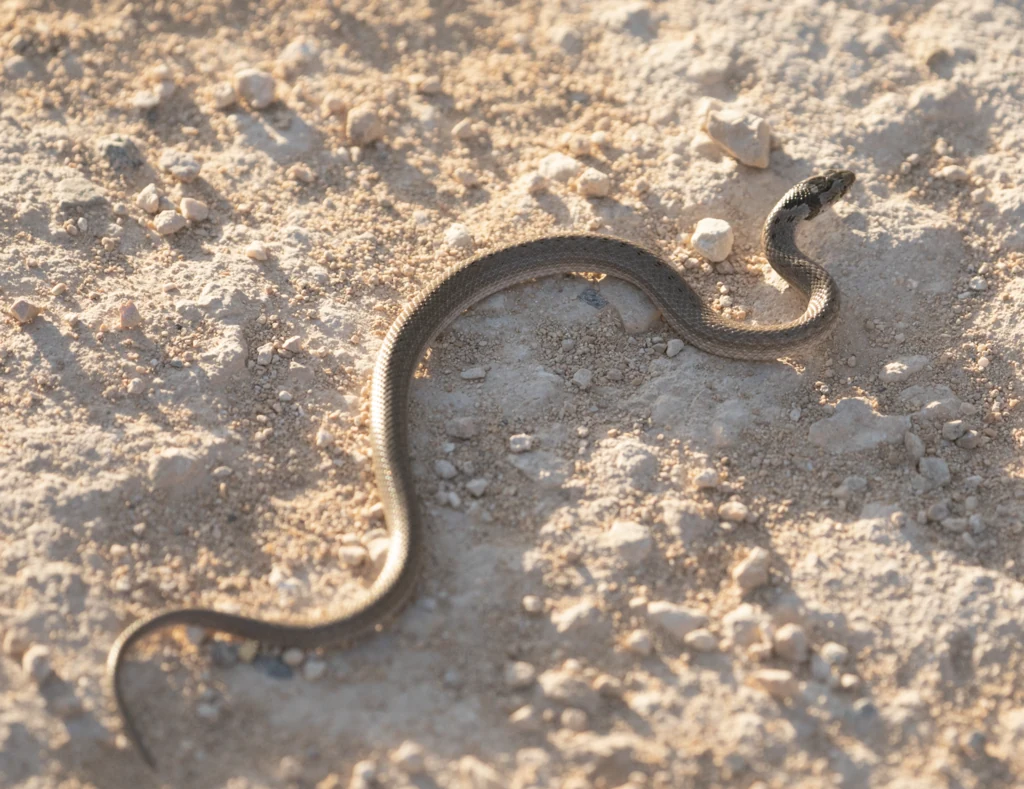
Macroprotodon cucullatus, photographed 2022-10-24. Identification follows the linked research-grade observation.

001 · Colubridae

False Smooth Snake

Macroprotodon cucullatus

(GEOFFROY SAINT-HILAIRE, 1827)

Venom unknownNot yet assessed

The current taxonomic treatment explicitly lists this country. This is country-scale checklist evidence, not a claim of continuous occupancy or a complete regional inventory.

Read the species account →

Paolo Zucca · CC BY 4.0 · https://creativecommons.org/licenses/by/4.0/
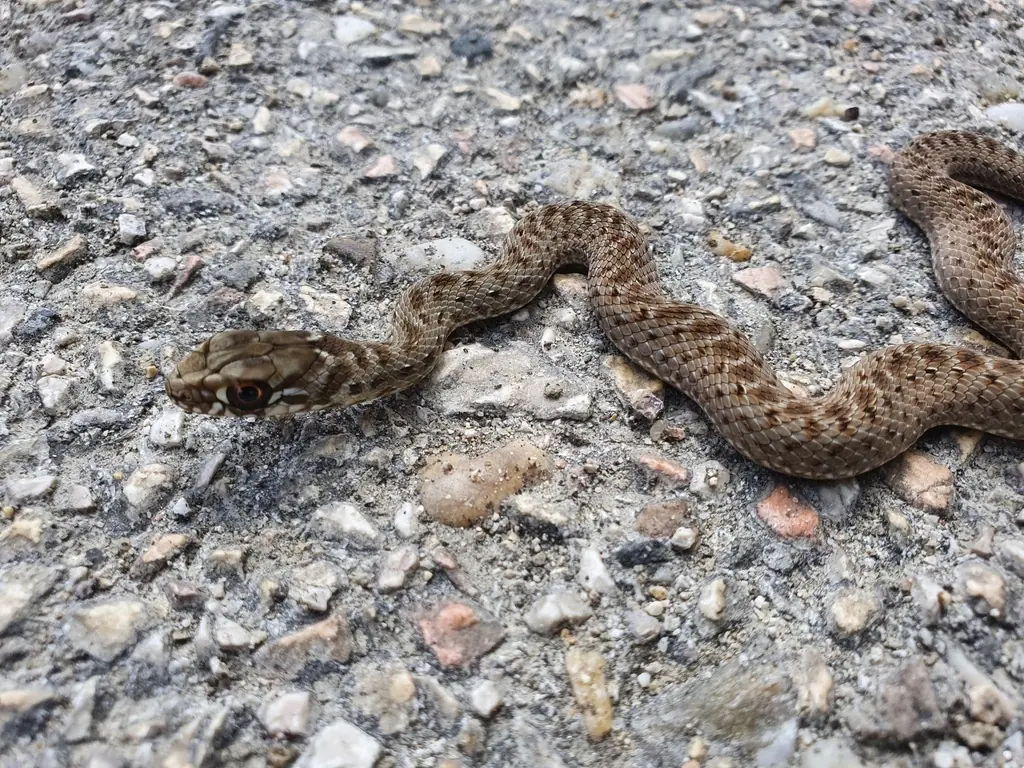
Malpolon monspessulanus. Identification follows the linked source community.

002 · Psammophiidae

Montpellier Snake

Malpolon monspessulanus

(HERMANN, 1804)

VenomousClinical severity not established

Country explicitly listed in the checked taxonomic treatment. The current taxonomic treatment explicitly lists this country. This is country-scale checklist evidence, not a claim of continuous occupancy or a complete regional inventory.

Read the species account →

João Valença · CC BY-SA 4.0 · https://creativecommons.org/licenses/by-sa/4.0/

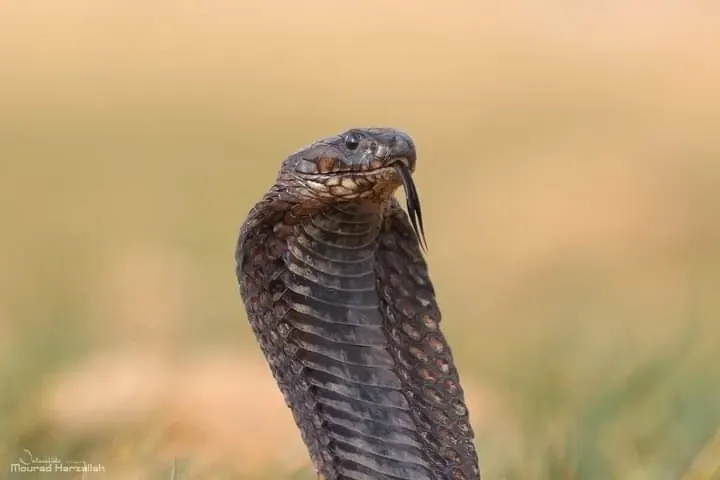
Naja haje. Identification follows the linked source community.

003 · Elapidae

Egyptian Cobra

Naja haje

(LINNAEUS, 1758)

VenomousClinical severity not established

The current taxonomic treatment explicitly lists this country. This is country-scale checklist evidence, not a claim of continuous occupancy or a complete regional inventory.

Read the species account →

Mourad Harzallah · CC BY 4.0 · https://creativecommons.org/licenses/by/4.0/
All 17 species in the country collection →

Read further

Evidence & sources.

Guide reviewed 12 October 2026. Source dates and geographic scope matter; landscape photographs do not establish species occurrence.

  1. Ramsar · Baie d’Ad-Dakhla, 2025 information sheet

    Site-specific coastal evidence. The source lists the submitting Party as Morocco; this atlas retains Western Sahara as a separate geographic entry without determining territorial status.

Continue through Western Sahara

Explore another habitat.