Pressures in the source record
Desertification and coastal pollution are documented national pressures. These are background concerns, not an assessment of the photographed point today.
Sources: CBD · United Arab Emirates national profile (draft)
United Arab Emirates · Habitat field guide
Explore the documented landscape around Wadi Wurayah. The named example anchors this guide; the country map and separately sourced species accounts answer different questions.
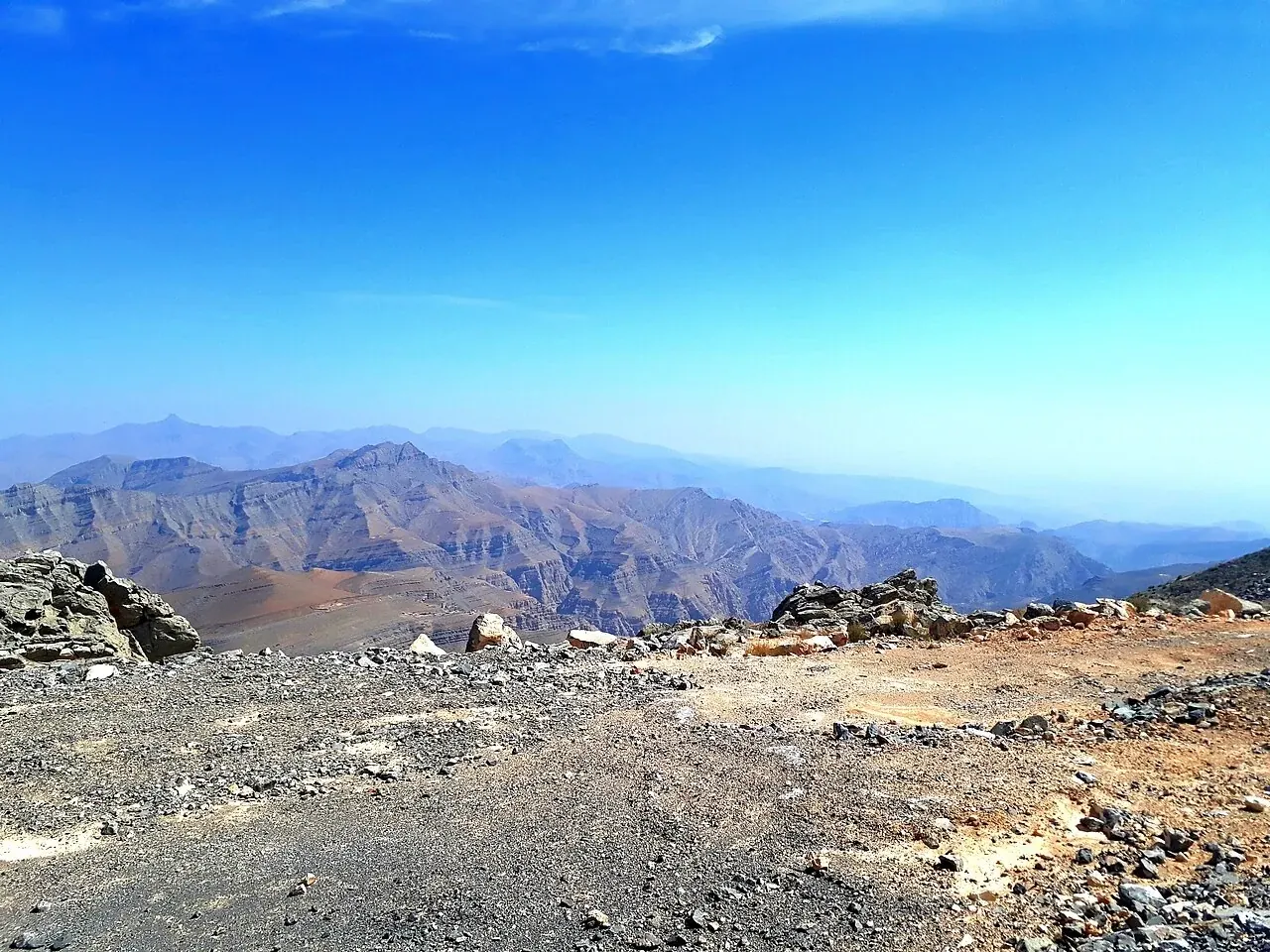
Rocky terrain at Jebel Jais, Ras Al Khaimah, United Arab Emirates.
Understanding the environment
Explore the documented landscape around Wadi Wurayah. The named example anchors this guide; the country map and separately sourced species accounts answer different questions.
Explore the structure · Valley → slope → ridge
Select a zone to see what changes.
Cover and land use
Compare woodland, cultivated ground and open rocky patches. Preserve the distinction between natural vegetation and working landscapes.
Compare this unit with the documented local setting and keep the observation date, exact place and source distinct.
These panels are a conceptual reading sequence, not a mapped transect or a recommendation to enter the site.
Sources: UNESCO · Wurayah
Field notes · 01
Wadi Wurayah lies in Fujairah's Hajar mountains. Its rocky catchment includes spring-fed streams and waterfalls, creating greener drainage lines within otherwise arid mountain terrain.
Sources: UNESCO · Wurayah
Field notes · 02
Keep elevation, aspect and vegetation separate. A valley woodland, cultivated terrace, rock slope and alpine summit can occur within one mountain view, yet represent very different conditions. Snow and glacier photographs illustrate geography, not snake habitat at that point.
Pressures on United Arab Emirates’s habitats
Desertification and coastal pollution are documented national pressures. These are background concerns, not an assessment of the photographed point today.
Sources: CBD · United Arab Emirates national profile (draft)
When revisiting an image or locality, compare the same season, water stage and viewing area before interpreting a change. Keep source dates visible.
Use the country and region maps to orient the landscape, then read each species profile for its independently reviewed habitat and range evidence. Similar scenery does not establish a shared species list.
The connected collection
These 1 species have supported country occurrence and an explicit habitat association in the shared account. The association may come from elsewhere in their range. This is not a complete local habitat inventory; the places above are landscape examples, not asserted collecting sites.
1 species · showing 1
001 · Colubridae
Species account
Confirmed by the revision.
Read the species account →Read further
Guide reviewed 11 October 2026. Source dates and geographic scope matter; landscape photographs do not establish species occurrence.
Historical national overview marked draft by the Secretariat; broad pressures and landscape context, not a current local condition survey, current statistics or wildlife locality evidence.
Named landscape, vegetation or hydrological setting only; no snake occurrence inferred. Historical site accounts are not current condition or access assessments.
Continue through United Arab Emirates
Explore the documented landscape around Abu Dhabi interior. The named example anchors this guide; the country map and separately sourced species accounts answer different questions.
02Explore the documented landscape around Marawah coastal system. The named example anchors this guide; the country map and separately sourced species accounts answer different questions.
03Explore the documented landscape around Marawah and Abu Dhabi islands. The named example anchors this guide; the country map and separately sourced species accounts answer different questions.