Pressures in the source record
Grazing, logging and altered water flows are documented pressures. These are background concerns, not an assessment of the photographed point today.
Sources: CBD · Kyrgyzstan national profile
Kyrgyzstan · Habitat field guide
Explore the documented landscape around Sary-Chelek lower slopes. The named example anchors this guide; the country map and separately sourced species accounts answer different questions.
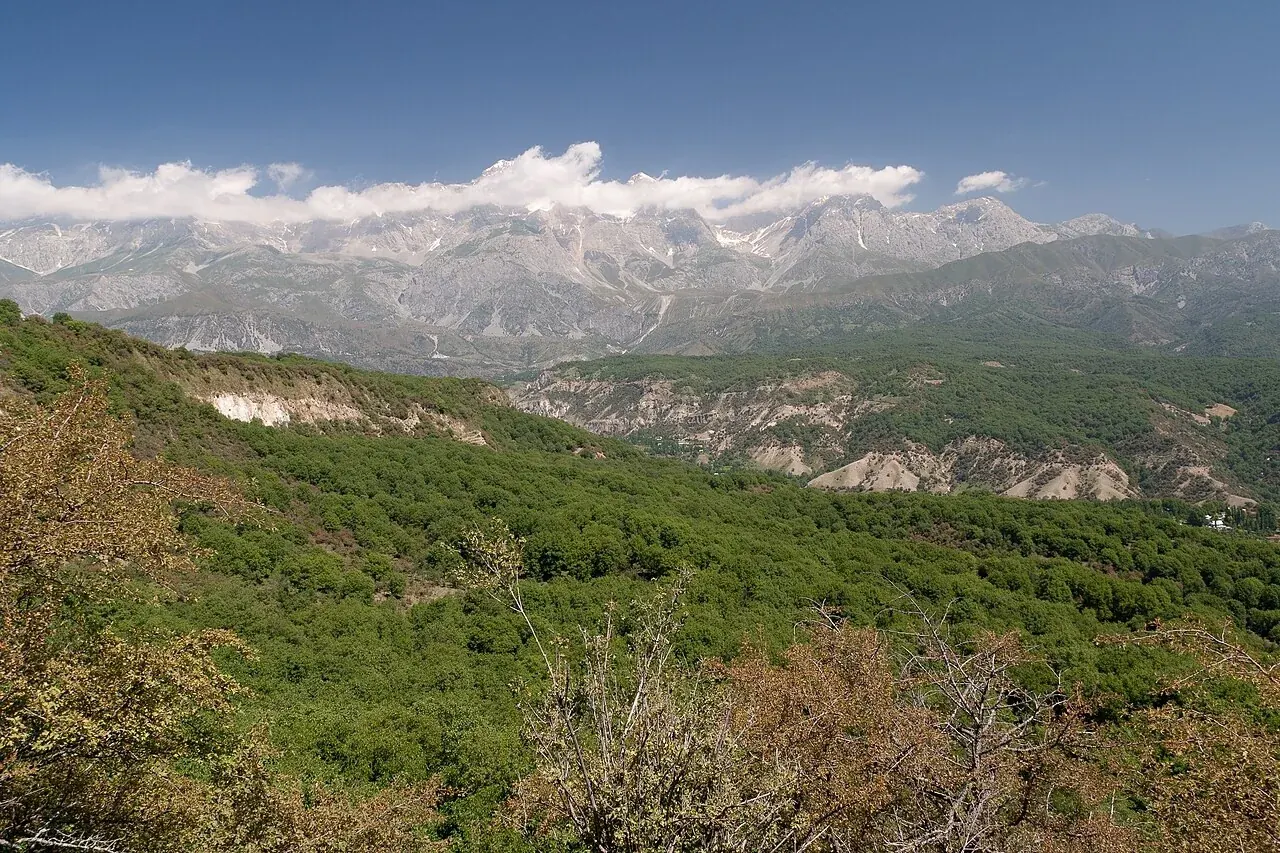
Walnut woodland and mountain backdrop at Arslanbob, Kyrgyzstan.
Understanding the environment
Explore the documented landscape around Sary-Chelek lower slopes. The named example anchors this guide; the country map and separately sourced species accounts answer different questions.
Explore the structure · Canopy → edge → drainage
Select a zone to see what changes.
Shade and cover
Describe the structure that is visible: canopy continuity, understory and ground cover. Do not infer an animal community from tree cover alone.
Compare this unit with the documented local setting and keep the observation date, exact place and source distinct.
These panels are a conceptual reading sequence, not a mapped transect or a recommendation to enter the site.
Sources: UNESCO · Sary Chelek
Field notes · 01
The lower parts of Sary-Chelek Biosphere Reserve contain nut-and-fruit woodland, including walnut, apple and pear. Meadows, steppe, rock and aquatic habitats also occur within the basin, so woodland is one part of a broader mountain mosaic.
Sources: UNESCO · Sary Chelek
Field notes · 02
Compare closed canopy, open woodland and planted trees. Record leaf litter, fallen wood and the width of exposed edges separately. A green satellite patch or distant treeline cannot establish forest quality.
Pressures on Kyrgyzstan’s habitats
Grazing, logging and altered water flows are documented pressures. These are background concerns, not an assessment of the photographed point today.
Sources: CBD · Kyrgyzstan national profile
When revisiting an image or locality, compare the same season, water stage and viewing area before interpreting a change. Keep source dates visible.
Use the country and region maps to orient the landscape, then read each species profile for its independently reviewed habitat and range evidence. Similar scenery does not establish a shared species list.
The connected collection
These 2 species have supported country occurrence and an explicit habitat association in the shared account. The association may come from elsewhere in their range. This is not a complete local habitat inventory; the places above are landscape examples, not asserted collecting sites.
2 species · showing 2
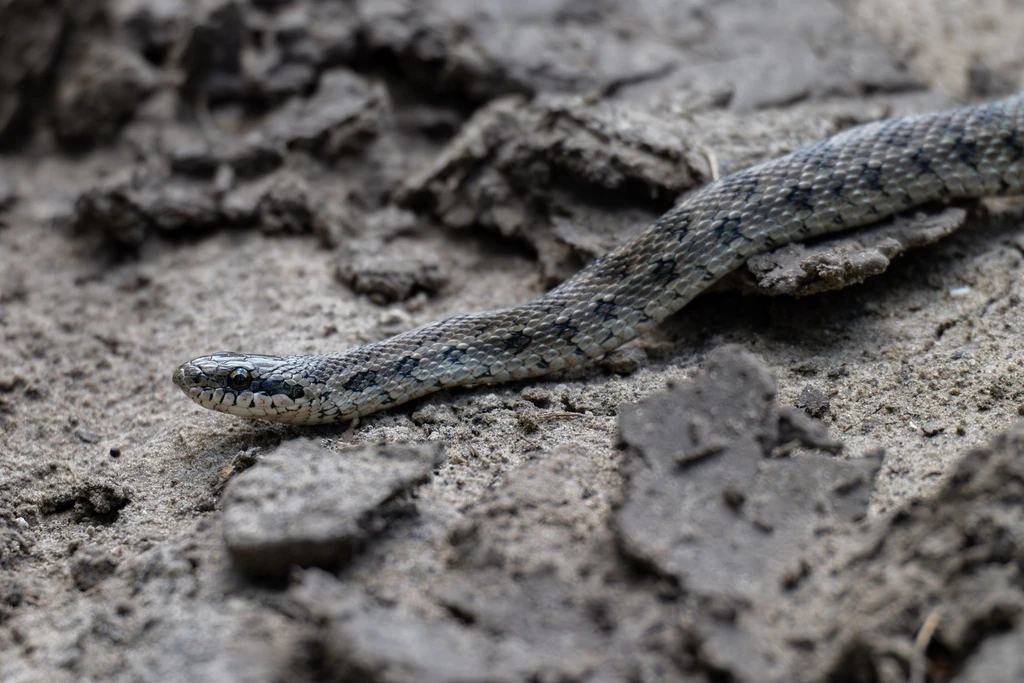
001 · Colubridae
Steppes Ratsnakes
Explicit country record in the checked taxonomic treatment. Issyk-Kul basin: observation GBIF 6235136276 (2026). The original iNaturalist entry was rechecked for research-grade identification, wild status and unrestricted coordinates; its reported uncertainty footprint lies within the mapped region. This is a community-reviewed observation, not a museum…
Read the species account →Stanislav Murashkin · CC BY 4.0 · https://creativecommons.org/licenses/by/4.0/
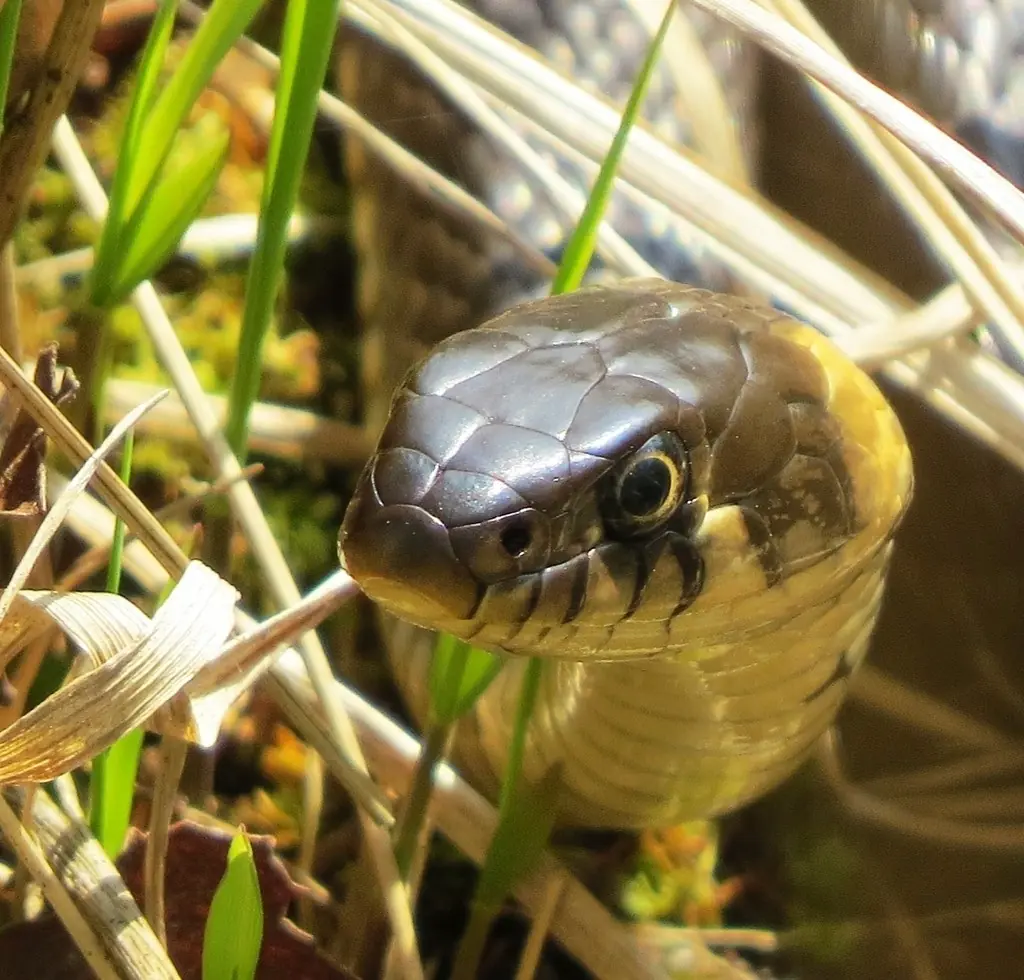
002 · Colubridae
Common Grass Snake
Explicit country record in the checked taxonomic treatment.
Read the species account →Micha Baum · CC BY-SA 4.0 · https://creativecommons.org/licenses/by-sa/4.0/
Read further
Guide reviewed 11 October 2026. Source dates and geographic scope matter; landscape photographs do not establish species occurrence.
Named landscape, vegetation or hydrological setting only; no snake occurrence inferred. Historical site accounts are not current condition or access assessments.
Historical national overview; broad pressures and landscape context, not a current local condition survey, current statistics or wildlife locality evidence.
Continue through Kyrgyzstan
Explore the documented landscape around Sary-Chelek basin. The named example anchors this guide; the country map and separately sourced species accounts answer different questions.
02Explore the documented landscape around Issyk-Kul basin. The named example anchors this guide; the country map and separately sourced species accounts answer different questions.