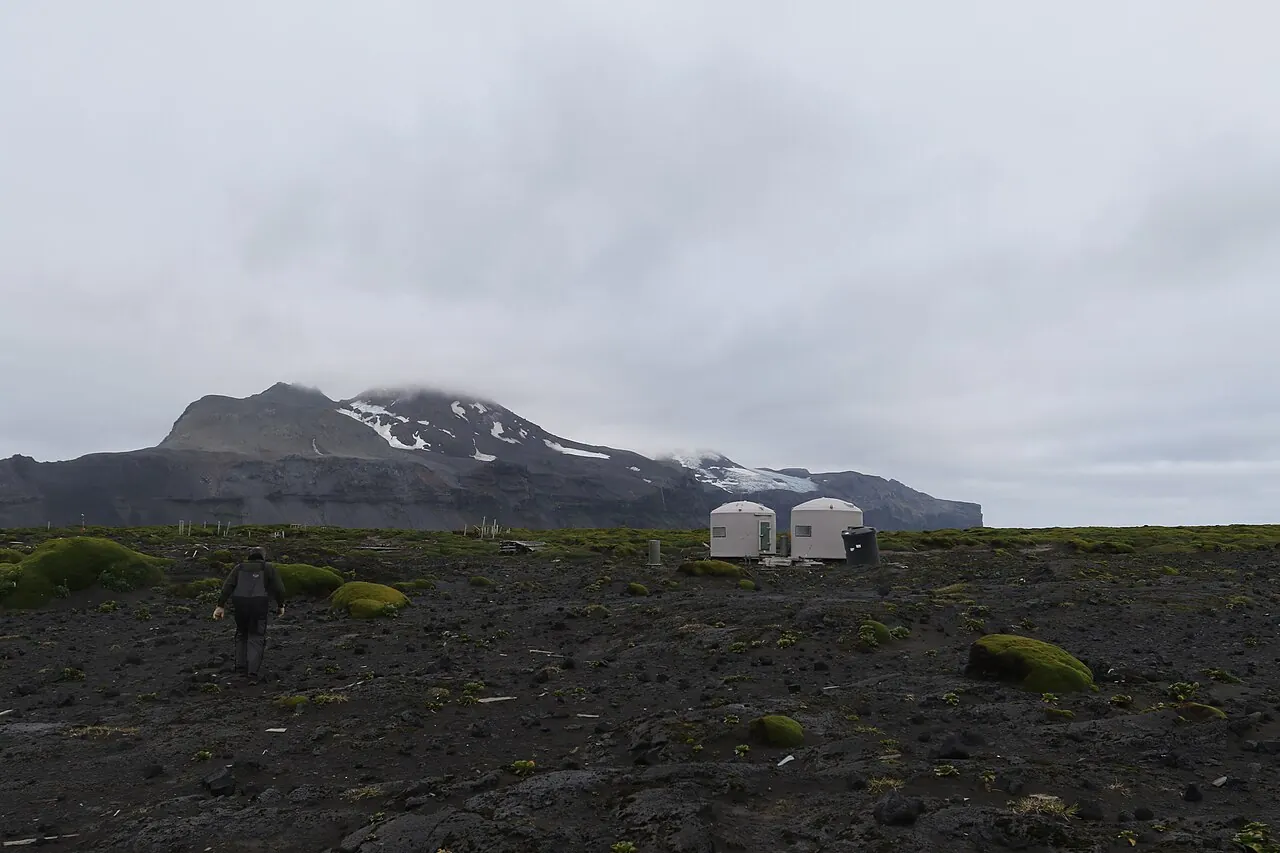
Atlas Cove research-station ground and Laurens Peninsula, Heard Island: exposed coastal terrain with low vegetation. Station structures are visible.

Heard Island and McDonald Islands · Habitat field guide

Subantarctic shores and ice-free vegetation

Heard’s ice-free margins contain small terrestrial vegetation communities beside the Southern Ocean.

Atlas Cove research-station ground and Laurens Peninsula, Heard Island: exposed coastal terrain with low vegetation. Station structures are visible.

Photograph: laikolosse · Image source · CC BY 2.0. Cropped to fill the hero; darkened for text legibility.

Understanding the environment

A sense of the habitat.

Heard’s ice-free margins contain small terrestrial vegetation communities beside the Southern Ocean.

Named example
Heard Island coastal margins
Landscape setting
Dated descriptions include tussock, meadow, herbfield, wet pools and fellfield.
Evidence scope
Habitat geography; no snake occupancy inferred

Explore the structure · Read the named setting from landform to vegetation and water.

Subantarctic shores and ice-free vegetation

Select a zone to see what changes.

Low plant cover

Vegetation

Herbs, mosses and grasses occupy suitable exposed ground.

This cue describes the named landscape, without adding animal occurrence evidence.

Conceptual reading guide, not a scale map, species range or field transect.

Sources: Australian Government · HIMI conservation statement, 2022 · Australian Antarctic Program · HIMI features and values

Field notes · 01

Landscape context

Heard’s ice-free margins contain small terrestrial vegetation communities beside the Southern Ocean.

Dated descriptions include tussock, meadow, herbfield, wet pools and fellfield.

Sources: Australian Government · HIMI conservation statement, 2022 · Australian Antarctic Program · HIMI features and values

Field notes · 02

Keep the evidence local

The place named here is an example within this territory. Habitat resemblance and a photograph do not establish a snake record; any future species entry needs separately reviewed locality evidence.

Sources: Australian Government · HIMI conservation statement, 2022 · Australian Antarctic Program · HIMI features and values

Pressures on Heard Island and McDonald Islands’s habitats

What is at risk?

What helps this habitat

Follow the responsible authority’s site protection and biosecurity guidance; check current access separately from this geographic account.

The connected collection

Snakes with habitat evidence.

These 0 species have supported country occurrence and an explicit habitat association in the shared account. The association may come from elsewhere in their range. This is not a complete local habitat inventory; the places above are landscape examples, not asserted collecting sites.

No species-level association has yet been resolved for this habitat in the collection. That does not mean snakes are absent.

0 species · showing 0

No matching locality records.

Try another name or clear the filters. Absence from a regional list does not establish absence in nature.

All 0 species in the country collection →

Read further

Evidence & sources.

Guide reviewed 2026-10-28. Source dates and geographic scope matter; landscape photographs do not establish species occurrence.

  1. Australian Government · HIMI conservation statement, 2022

    Dated account of tussock, herbfield, moss and wetland vegetation; historical flora numbers are not current survey totals.

  2. Australian Antarctic Program · HIMI features and values

    Big Ben, glacier retreat and volcanic changes to McDonald Island. Coastlines are dynamic.

Continue through Heard Island and McDonald Islands

Explore another habitat.

01

Heard Island’s volcanic glaciers

Big Ben and the glaciers descending from it dominate Heard Island.