Gambia · Habitat field guide
Mangroves & tidal woodland
Mangrove woodland is part of the country’s coastal and river landscape. The national account identifies wood extraction among the pressures on it.
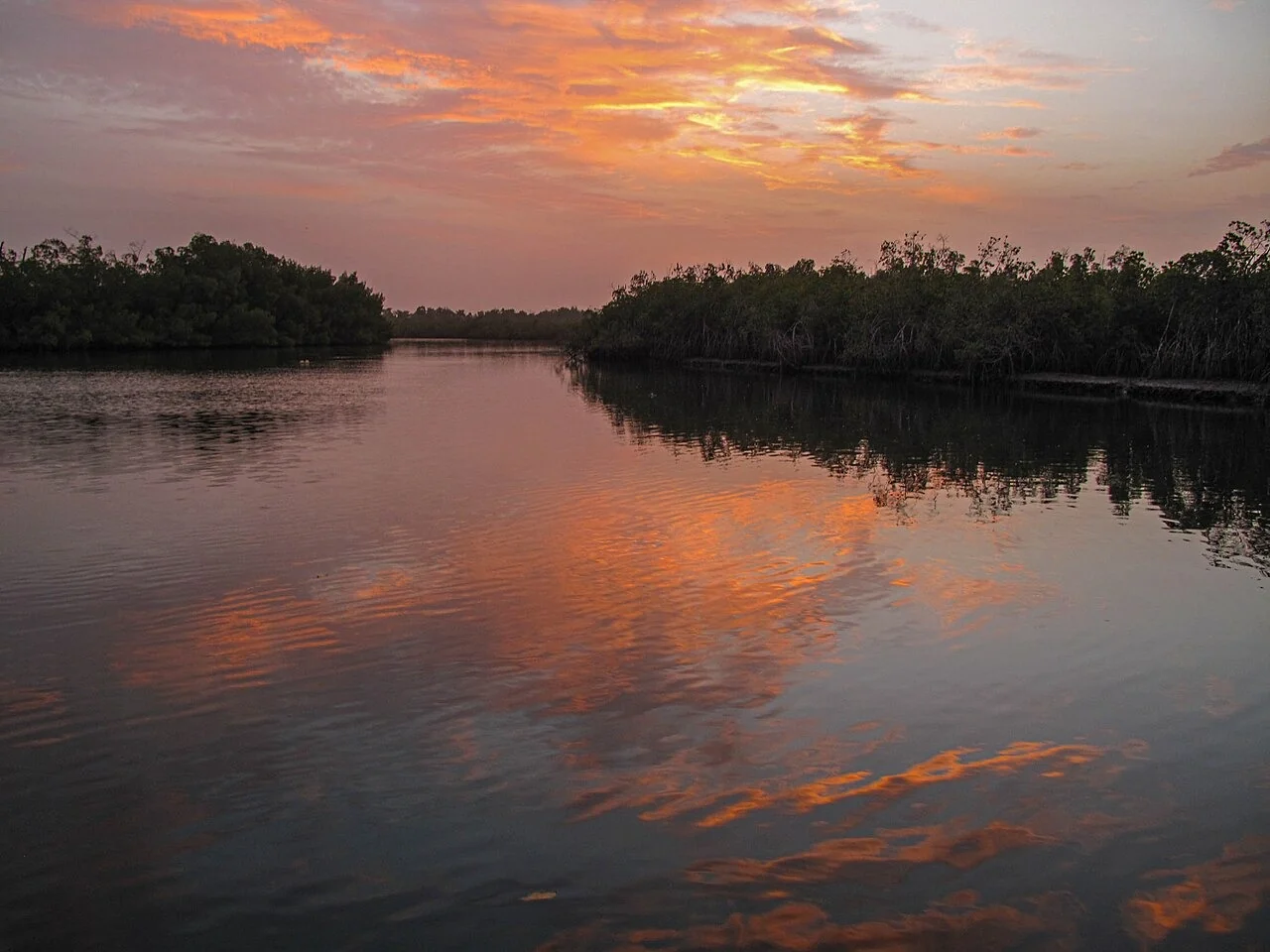
Mangroves and water at Makasutu, The Gambia, photographed in 2012.
Understanding the environment
A sense of the habitat.
Mangrove woodland is part of the country’s coastal and river landscape. The national account identifies wood extraction among the pressures on it.
- Geographic scope
- Gambia; named examples and source scope matter.
- Evidence scale
- Landscape context is separate from species locality evidence.
- Source chronology
- Consult the original publication date; checked 12 October 2026.
Explore the structure · Select a layer to compare the details a locality record can preserve.
Read the setting in three layers.
Select a zone to see what changes.
Tidal setting
Tidal setting
Keep estuary and tidal-channel names with the original observation.
Compare this detail with the original field or museum record before assigning a habitat association.
These reading prompts explain how to interpret evidence; they do not assert that every feature occurs at every site.
Sources: Convention on Biological Diversity · Gambia national profile
Field notes · 01
The documented landscape
Mangrove woodland is part of the country’s coastal and river landscape. The national account identifies wood extraction among the pressures on it.
Sources: Convention on Biological Diversity · Gambia national profile
Field notes · 02
Connect habitat and locality
Use the species account to check whether a habitat statement applies to this country or elsewhere in the species’ range. A landscape photograph illustrates its own named place; it is not evidence of snake presence.
Pressures on Gambia’s habitats
What is at risk?
A site-specific assessment of pressures has not yet been extracted for this guide. The landscape sources below provide context; they do not establish a current threat level for each snake species.
What helps this habitat
Retain natural vegetation and water connections where local conservation evidence supports them. Consult the linked national or site account for the pressures and management actions actually reported there.
The connected collection
Snakes with habitat evidence.
These 0 species have supported country occurrence and an explicit habitat association in the shared account. The association may come from elsewhere in their range. This is not a complete local habitat inventory; the places above are landscape examples, not asserted collecting sites.
No species-level association has yet been resolved for this habitat in the collection. That does not mean snakes are absent.
0 species · showing 0
No matching locality records.
Try another name or clear the filters. Absence from a regional list does not establish absence in nature.
Read further
Evidence & sources.
Guide reviewed 12 October 2026. Source dates and geographic scope matter; landscape photographs do not establish species occurrence.
- Convention on Biological Diversity · Gambia national profile
National biodiversity profile based on the reporting sources identified by the CBD. Used for landscape context; older statistics are not presented as current monitoring or a snake inventory.
Continue through Gambia