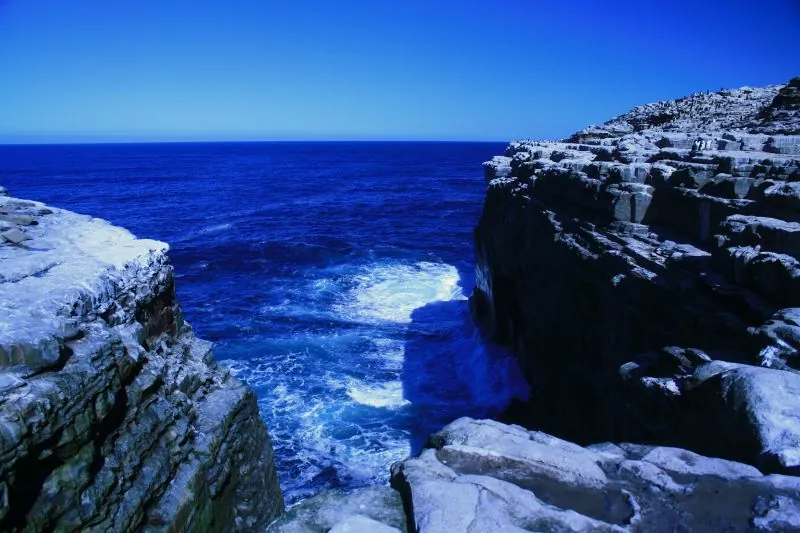
Rockhopper Point on Sea Lion Island, Falkland Islands: exposed rock cliffs and the surrounding sea.

Falkland Islands · Habitat field guide

Tussac and Atlantic shores

Coastal tussac forms dense grass habitat in a generally treeless island landscape.

Rockhopper Point on Sea Lion Island, Falkland Islands: exposed rock cliffs and the surrounding sea.

Photograph: Chris Pearson · Image source · CC BY 2.0. Cropped to fill the hero; darkened for text legibility.

Understanding the environment

A sense of the habitat.

Coastal tussac forms dense grass habitat in a generally treeless island landscape.

Named example
Sea Lion Island and coastal tussac
Landscape setting
The coastal setting includes grass, beaches and exposed rock.
Evidence scope
Habitat geography; no snake occupancy inferred

Explore the structure · Read the named setting from landform to vegetation and water.

Tussac and Atlantic shores

Select a zone to see what changes.

Tall grass

Tussac

Dense grass clumps provide structure close to the sea.

This cue describes the named landscape, without adding animal occurrence evidence.

Conceptual reading guide, not a scale map, species range or field transect.

Sources: UK Overseas Territories Conservation Forum · Falkland Islands · Falkland Islands Tourist Board · Sea Lion Island guide

Field notes · 01

Landscape context

Coastal tussac forms dense grass habitat in a generally treeless island landscape.

The coastal setting includes grass, beaches and exposed rock.

Sources: UK Overseas Territories Conservation Forum · Falkland Islands · Falkland Islands Tourist Board · Sea Lion Island guide

Field notes · 02

Keep the evidence local

The place named here is an example within this territory. Habitat resemblance and a photograph do not establish a snake record; any future species entry needs separately reviewed locality evidence.

Sources: UK Overseas Territories Conservation Forum · Falkland Islands · Falkland Islands Tourist Board · Sea Lion Island guide

Pressures on Falkland Islands’s habitats

What is at risk?

What helps this habitat

Follow the responsible authority’s site protection and biosecurity guidance; check current access separately from this geographic account.

The connected collection

Snakes with habitat evidence.

These 0 species have supported country occurrence and an explicit habitat association in the shared account. The association may come from elsewhere in their range. This is not a complete local habitat inventory; the places above are landscape examples, not asserted collecting sites.

No species-level association has yet been resolved for this habitat in the collection. That does not mean snakes are absent.

0 species · showing 0

No matching locality records.

Try another name or clear the filters. Absence from a regional list does not establish absence in nature.

All 0 species in the country collection →

Read further

Evidence & sources.

Guide reviewed 2026-10-28. Source dates and geographic scope matter; landscape photographs do not establish species occurrence.

  1. UK Overseas Territories Conservation Forum · Falkland Islands

    Native reptile absence, treeless grasslands, dwarf shrubs and coastal tussac.

  2. Falkland Islands Tourist Board · Sea Lion Island guide

    Position south of East Falkland, island geography and coastal habitats; older visitor guide.

Continue through Falkland Islands

Explore another habitat.

01

Peatlands, ponds and streams

The Falklands contain freshwater wetlands, rivers and ponds within an open heath-and-grassland landscape.