Dominican Republic · Habitat field guide
Coasts & marine settings
Coastal environments are discussed alongside development associated with tourism. A regional conservation pressure does not establish a species-specific decline.
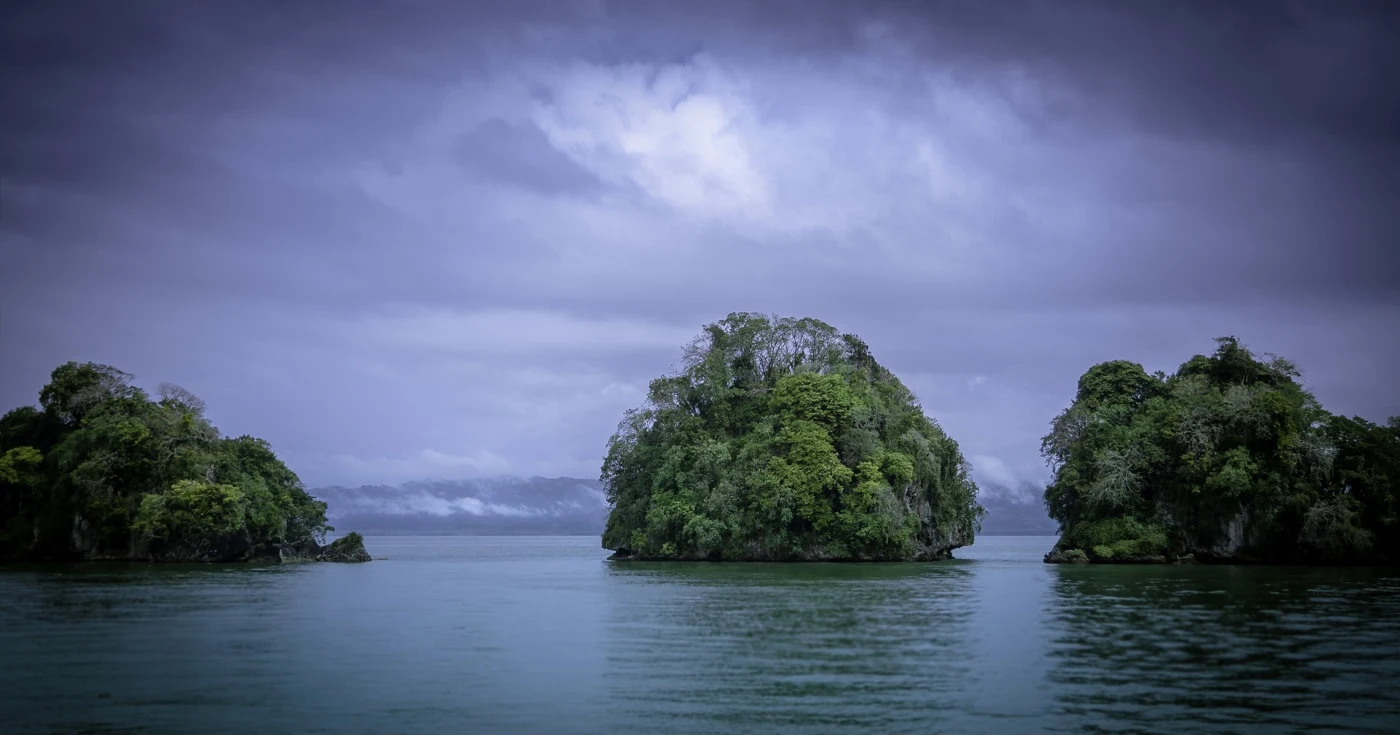
Wooded limestone islets and coastal water at Los Haitises, Dominican Republic.
Understanding the environment
A sense of the habitat.
Coastal environments are discussed alongside development associated with tourism. A regional conservation pressure does not establish a species-specific decline.
- Geographic scope
- Dominican Republic; source locality matters.
- Evidence scale
- Landscape descriptions are separate from species records.
- Source date
- Retain the cited publication date; reviewed 16 October 2026.
Explore the structure · Select a layer to compare details retained in a field record.
Read the locality in three layers.
Select a zone to see what changes.
Shore
Shore
Separate sand, rock and vegetated shoreline.
Check this detail in the original record before assigning a species to the habitat.
These reading prompts are conceptual, not a transect or an occurrence map.
Sources: Convention on Biological Diversity · Dominican Republic national profile
Field notes · 01
The documented setting
Coastal environments are discussed alongside development associated with tourism. A regional conservation pressure does not establish a species-specific decline.
Sources: Convention on Biological Diversity · Dominican Republic national profile
Field notes · 02
Connect the setting to a species
A habitat description and a country record answer different questions. Follow the linked species account for evidence of habitat use; an empty filtered collection indicates missing extracted evidence, not biological absence.
Pressures on Dominican Republic’s habitats
What is at risk?
A site-specific assessment of pressures has not yet been extracted for this guide. The landscape sources below provide context; they do not establish a current threat level for each snake species.
What helps this habitat
Consult the source’s own conservation context and dates before interpreting habitat change. A broad landscape pressure does not establish a measured decline for every snake.
The connected collection
Snakes with habitat evidence.
These 0 species have supported country occurrence and an explicit habitat association in the shared account. The association may come from elsewhere in their range. This is not a complete local habitat inventory; the places above are landscape examples, not asserted collecting sites.
No species-level association has yet been resolved for this habitat in the collection. That does not mean snakes are absent.
0 species · showing 0
No matching locality records.
Try another name or clear the filters. Absence from a regional list does not establish absence in nature.
Read further
Evidence & sources.
Guide reviewed 16 October 2026. Source dates and geographic scope matter; landscape photographs do not establish species occurrence.
- Convention on Biological Diversity · Dominican Republic national profile
Historical Secretariat draft, pending Party approval. Landscape context only; dated statistics and projections are not presented as current measurements. Checked 16 October 2026.
Continue through Dominican Republic
Explore another habitat.
Forest & woodland
The national profile separates coniferous, broadleaf, dry and wetland forest types. It also cautions that natural forest and planted tree cover need to be distinguished.
02Highland environments
Cloud forest is singled out as a conservation concern in the national profile. Historical forecasts are not treated here as observed current losses.