Pressures and evidence limits
This guide does not yet include a quantified local pressure assessment. Record observed land use separately from demonstrated ecological effects, and compare dated observations from the same season.
Croatia · Habitat field guide
Explore Velebit through the documented landscape and its visible structure. The named example anchors this guide; it does not represent every habitat in the country.
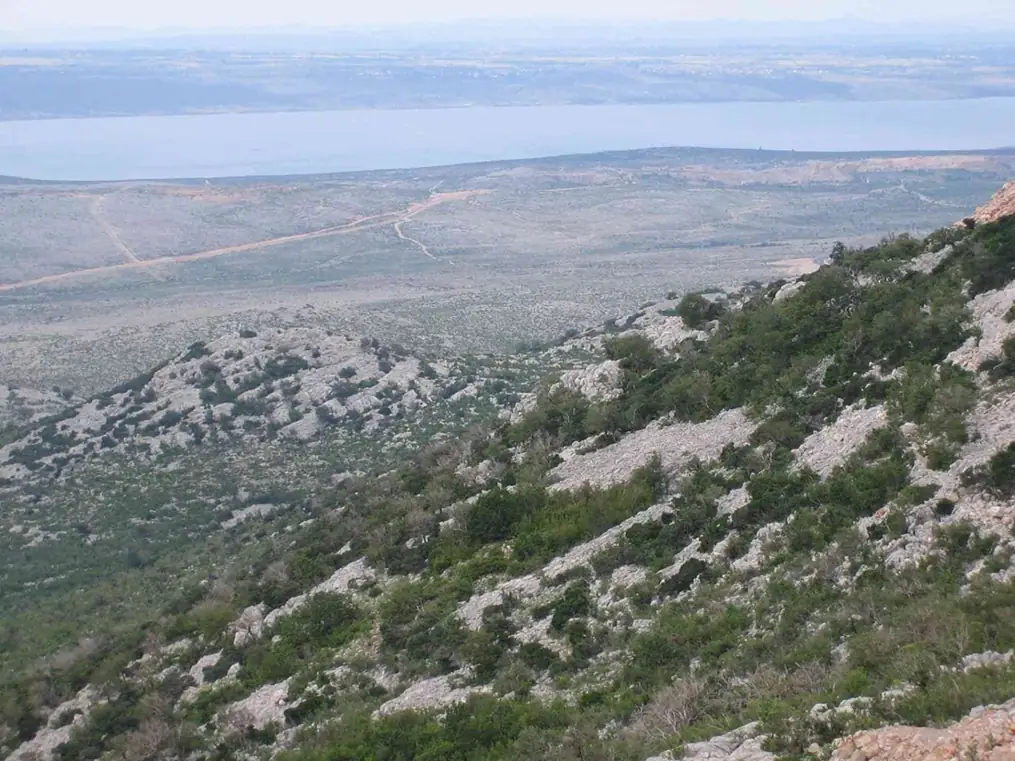
Velebit's rocky coastal slopes above the Adriatic, with Pag in the wider view.
Understanding the environment
Explore Velebit through the documented landscape and its visible structure. The named example anchors this guide; it does not represent every habitat in the country.
Explore the structure · Rock face → soil pocket → drainage
Select a zone to see what changes.
Substrate and relief
Describe visible rock and slope without inferring the extent of caves or crevices.
Keep observation date, photographed place and the source description distinct.
A conceptual reading sequence, not a mapped transect or an invitation to enter restricted terrain.
Sources: UNESCO · Velebit
Field notes · 01
Velebit has exposed coastal karst and wooded inner slopes. UNESCO distinguishes beech, fir and pine woods, subalpine beech and open high meadows; the mountain landscape extends across more than one county.
Sources: UNESCO · Velebit
Field notes · 02
Separate exposed limestone, soil-filled hollows and wooded slopes. Surface dryness does not establish the absence of underground water. A cave or cliff image supplies geographic context, not a snake record.
Pressures on Croatia’s habitats
This guide does not yet include a quantified local pressure assessment. Record observed land use separately from demonstrated ecological effects, and compare dated observations from the same season.
Keep landform, water, vegetation and land use separate when reading the landscape. Use the linked species accounts for independently sourced distribution evidence.
The connected collection
These 0 species have supported country occurrence and an explicit habitat association in the shared account. The association may come from elsewhere in their range. This is not a complete local habitat inventory; the places above are landscape examples, not asserted collecting sites.
No species-level association has yet been resolved for this habitat in the collection. That does not mean snakes are absent.
0 species · showing 0
Try another name or clear the filters. Absence from a regional list does not establish absence in nature.
Read further
Guide reviewed 11 October 2026. Source dates and geographic scope matter; landscape photographs do not establish species occurrence.
Named landscape description, read and checked 11 October 2026. Historic source dates remain explicit; not a snake survey or live access notice.
Continue through Croatia