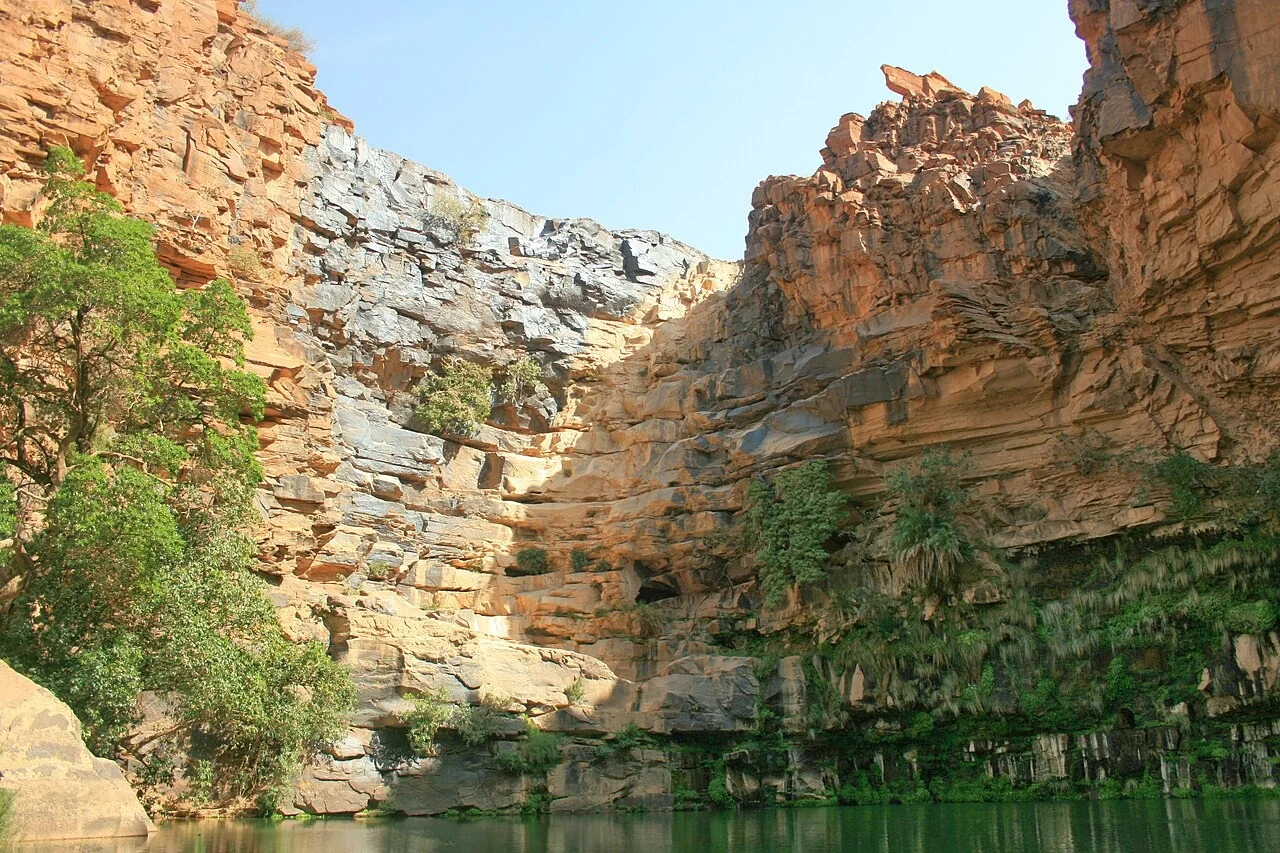
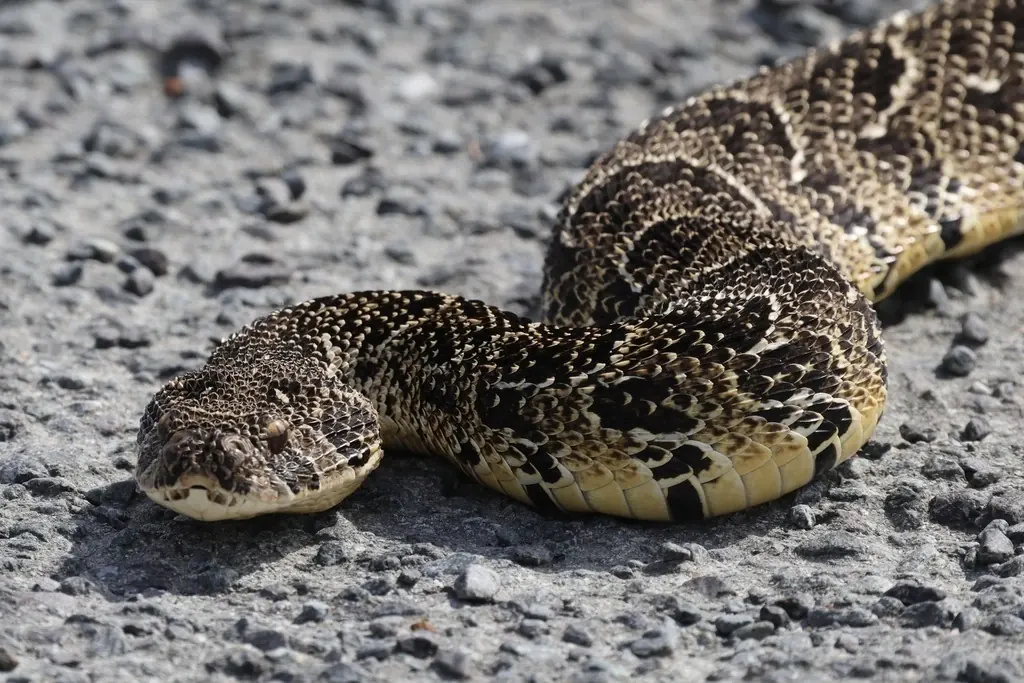
Guelta Maya in the Ennedi landscape, Chad, photographed in 2013.

Chad · Habitat field guide

Deserts & dry country

Ennedi is a sandstone landscape of cliffs and canyons. Persistent water in some canyons supports local ecological refuges within the desert.

Guelta Maya in the Ennedi landscape, Chad, photographed in 2013.

Photograph: Sven.oehm · Image source · CC BY-SA 4.0. Cropped to fill the hero; darkened for text legibility.

Understanding the environment

A sense of the habitat.

Ennedi is a sandstone landscape of cliffs and canyons. Persistent water in some canyons supports local ecological refuges within the desert.

Geographic scope
Chad; named examples and source scope matter.
Evidence scale
Landscape context is separate from species locality evidence.
Source chronology
Consult the original publication date; checked 12 October 2026.

Explore the structure · Select a layer to compare the details a locality record can preserve.

Read the setting in three layers.

Select a zone to see what changes.

Substrate

Substrate

Record whether the source describes sand, stone or exposed bedrock.

Compare this detail with the original field or museum record before assigning a habitat association.

These reading prompts explain how to interpret evidence; they do not assert that every feature occurs at every site.

Sources: Convention on Biological Diversity · Chad national profile · UNESCO · Ennedi Massif

Field notes · 01

The documented landscape

Ennedi is a sandstone landscape of cliffs and canyons. Persistent water in some canyons supports local ecological refuges within the desert.

Sources: Convention on Biological Diversity · Chad national profile · UNESCO · Ennedi Massif

Field notes · 02

Connect habitat and locality

Use the species account to check whether a habitat statement applies to this country or elsewhere in the species’ range. A landscape photograph illustrates its own named place; it is not evidence of snake presence.

Pressures on Chad’s habitats

What is at risk?

A site-specific assessment of pressures has not yet been extracted for this guide. The landscape sources below provide context; they do not establish a current threat level for each snake species.

What helps this habitat

Retain natural vegetation and water connections where local conservation evidence supports them. Consult the linked national or site account for the pressures and management actions actually reported there.

The connected collection

Snakes with habitat evidence.

These 8 species have supported country occurrence and an explicit habitat association in the shared account. The association may come from elsewhere in their range. This is not a complete local habitat inventory; the places above are landscape examples, not asserted collecting sites.

8 species · showing 8

Bitis arietans. Identification follows the linked source community.

001 · Viperidae

Puff Adder

Bitis arietans

(MERREM, 1820)

VenomousClinical severity not established

Explicit country record in the current species treatment. The current taxonomic treatment explicitly lists this country. This is country-scale checklist evidence, not a claim of continuous occupancy or a complete regional inventory. Southern river plains: observation GBIF 5037242506 (2025). The original iNaturalist entry was rechecked for research-grade…

Read the species account →

Cricket Raspet · CC BY 4.0 · https://creativecommons.org/licenses/by/4.0/
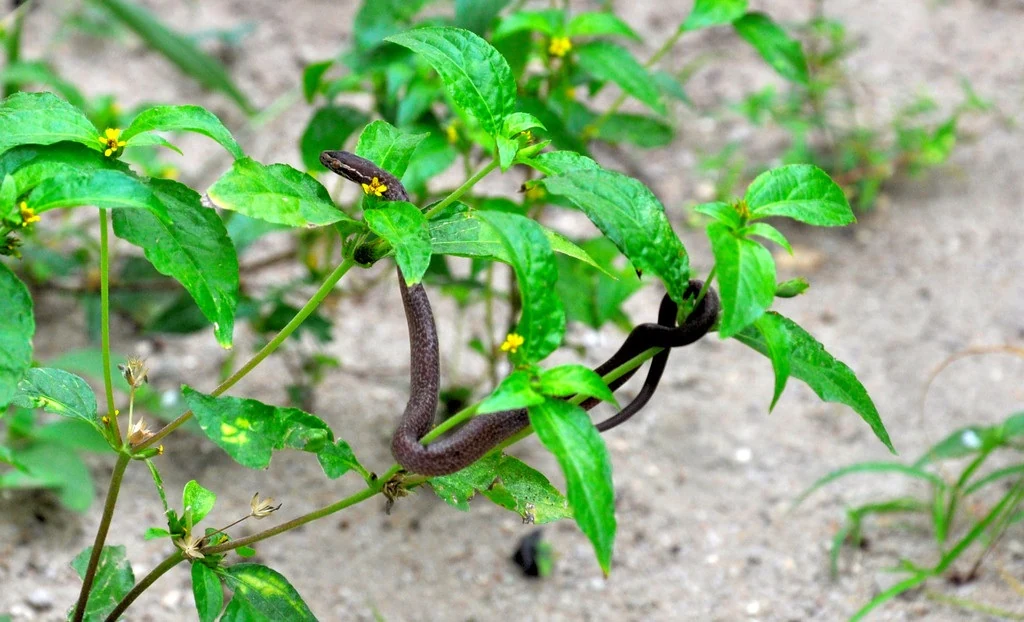
Boaedon fuliginosus, photographed 2020-08-12. Identification follows the linked research-grade observation.

002 · Lamprophiidae

Brown House Snake, African House Snake

Boaedon fuliginosus

(BOIE, 1827)

Non-venomous

Listed in the reviewed taxonomic treatment. The current taxonomic treatment explicitly lists this country. This is country-scale checklist evidence, not a claim of continuous occupancy or a complete regional inventory.

Read the species account →

Diossina · CC BY 4.0 · https://creativecommons.org/licenses/by/4.0/
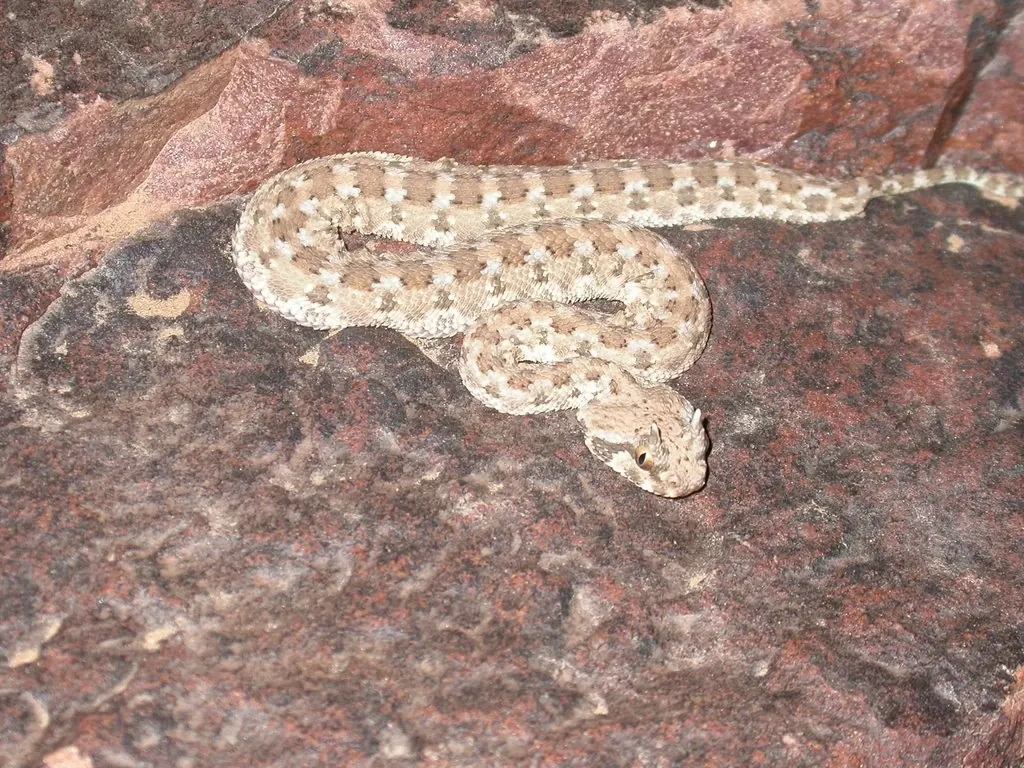
Cerastes cerastes. Identification follows the linked source community.

003 · Viperidae

Desert Horned Viper

Cerastes cerastes

(LINNAEUS, 1758)

VenomousClinical severity not established

Explicit country record in the current species treatment. The current taxonomic treatment explicitly lists this country. This is country-scale checklist evidence, not a claim of continuous occupancy or a complete regional inventory.

Read the species account →

Julien Renoult · CC BY 4.0 · https://creativecommons.org/licenses/by/4.0/
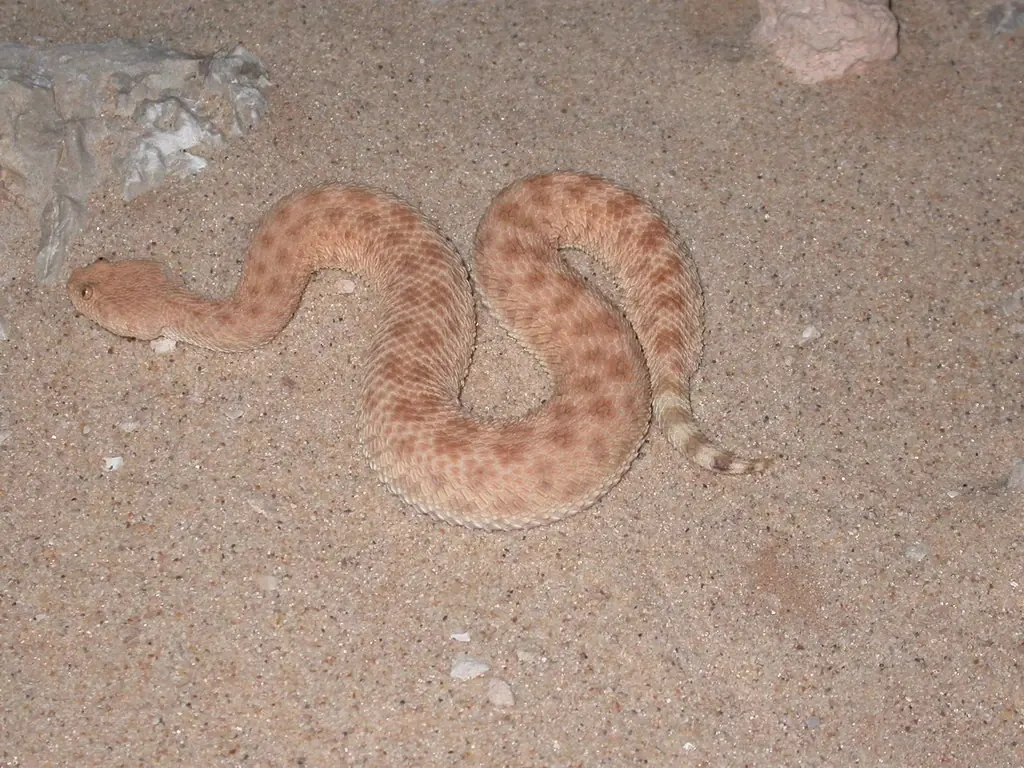
Cerastes vipera. Identification follows the linked source community.

004 · Viperidae

Sahara Sand Viper

Cerastes vipera

(LINNAEUS, 1758)

VenomousClinical severity not established

Explicit country record in the current species treatment. The current taxonomic treatment explicitly lists this country. This is country-scale checklist evidence, not a claim of continuous occupancy or a complete regional inventory.

Read the species account →

Julien Renoult · CC BY 4.0 · https://creativecommons.org/licenses/by/4.0/
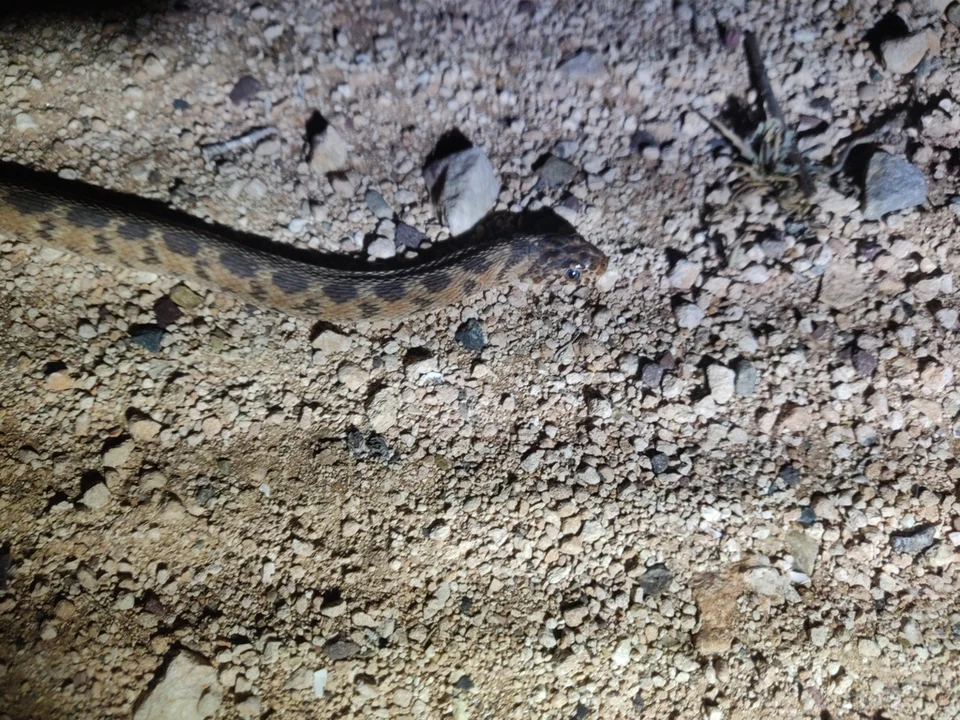
Dasypeltis sahelensis, Morocco (public location obscured); photographed 2024-04-20.

005 · Colubridae

Sahel Egg Eater

Dasypeltis sahelensis

TRAPE & MANÉ, 2006

Venom unknownNot yet assessed

Listed in the reviewed taxonomic treatment. The current taxonomic treatment explicitly lists this country. This is country-scale checklist evidence, not a claim of continuous occupancy or a complete regional inventory.

Read the species account →

Teddy Gilbert · CC BY 4.0 · https://creativecommons.org/licenses/by/4.0/
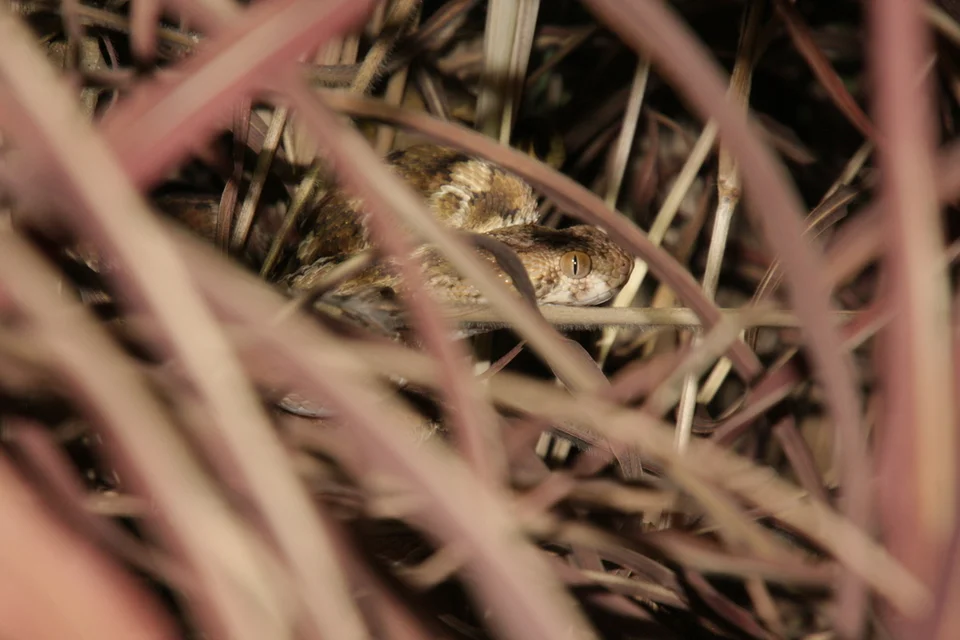
Echis leucogaster, Niamey, Niger; photographed 2016-10-31.

006 · Viperidae

Roman's Saw-scaled Viper

Echis leucogaster

ROMAN, 1972

VenomousClinical severity not established

Listed in the reviewed taxonomic treatment. The current taxonomic treatment explicitly lists this country. This is country-scale checklist evidence, not a claim of continuous occupancy or a complete regional inventory.

Read the species account →

B. P. White · CC BY-SA 4.0 · https://creativecommons.org/licenses/by-sa/4.0/

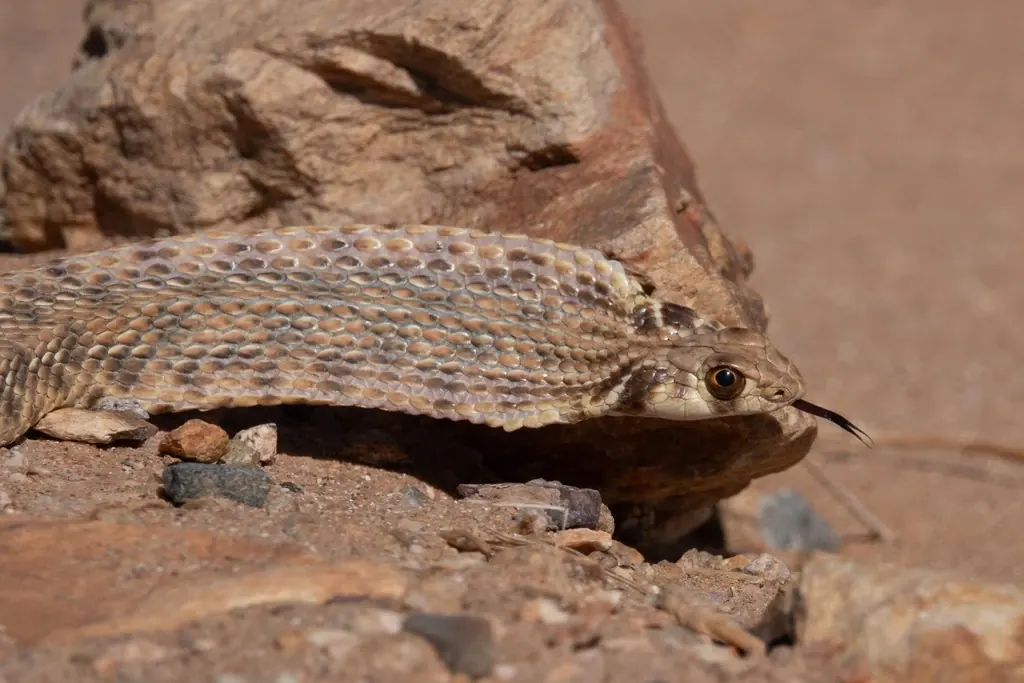
Malpolon moilensis. Identification follows the linked source community.

007 · Psammophiidae

Moila Snake

Malpolon moilensis

(REUSS, 1834)

Venom unknownNot yet assessed

Explicit country record in the current species treatment. The current taxonomic treatment explicitly lists this country. This is country-scale checklist evidence, not a claim of continuous occupancy or a complete regional inventory. Central basins: observation GBIF 4597536881 (2024). The original iNaturalist entry was rechecked for research-grade…

Read the species account →

Demian Hiß · CC BY 4.0 · https://creativecommons.org/licenses/by/4.0/
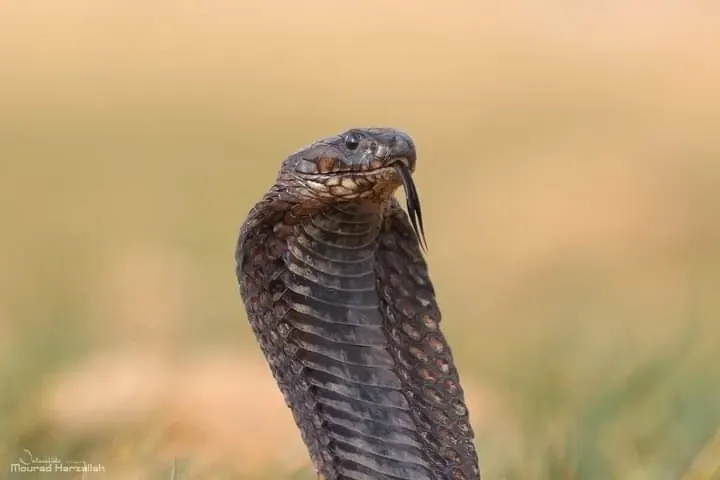
Naja haje. Identification follows the linked source community.

008 · Elapidae

Egyptian Cobra

Naja haje

(LINNAEUS, 1758)

VenomousClinical severity not established

The current taxonomic treatment explicitly lists this country. This is country-scale checklist evidence, not a claim of continuous occupancy or a complete regional inventory. Southern river plains: observation GBIF 4528301822 (2024). The original iNaturalist entry was rechecked for research-grade identification, wild status and unrestricted coordinates;…

Read the species account →

Mourad Harzallah · CC BY 4.0 · https://creativecommons.org/licenses/by/4.0/
All 69 species in the country collection →

Read further

Evidence & sources.

Guide reviewed 12 October 2026. Source dates and geographic scope matter; landscape photographs do not establish species occurrence.

  1. Convention on Biological Diversity · Chad national profile

    Historical draft prepared by the CBD Secretariat; awaiting Party approval. Used for landscape context; older statistics are not presented as current monitoring or a snake inventory.

  2. UNESCO · Ennedi Massif

    Sandstone landforms and water refuges in northeastern Chad.

Continue through Chad

Explore another habitat.

01

Savanna & grassland

Chad’s southern Sudanian zone includes savanna landscapes distinct from the Sahel and Sahara farther north.

02

Rivers, lakes & wetlands

Lake Chad and the Chari and Logone rivers form major aquatic landscapes. Floodplains and permanent channels must be distinguished in records.