Cayman Islands · Habitat field guide
Mangrove margins and lagoons
Little Cayman’s Booby Pond combines a saltwater lagoon, mangrove margins and adjoining dry woodland. The habitat guide describes that named transition, without assigning snake records to the reserve.
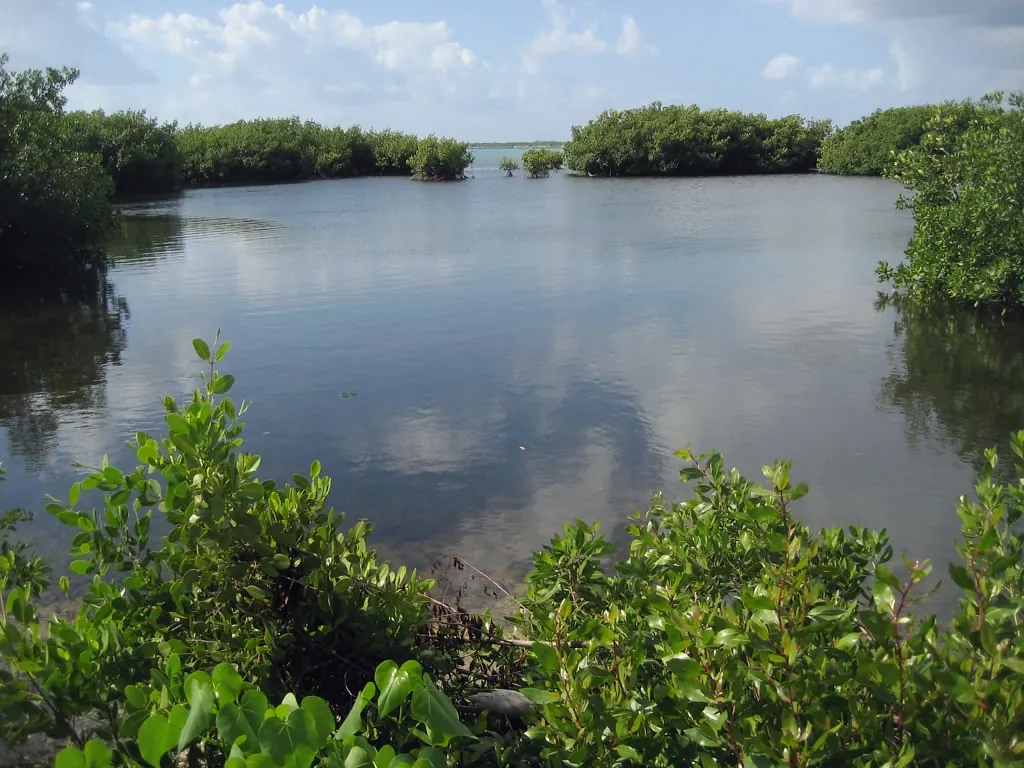
Mangrove-fringed water in Barkers National Park, Grand Cayman.
Understanding the environment
A sense of the habitat.
Little Cayman’s Booby Pond combines a saltwater lagoon, mangrove margins and adjoining dry woodland. The habitat guide describes that named transition, without assigning snake records to the reserve.
- Named setting
- Booby Pond
- Evidence scale
- Habitat context; local snake occupancy requires its own record.
Explore the structure · Compare the named landscape components.
Mangrove margins and lagoons
Select a zone to see what changes.
Open water
Lagoon
Read the pond as a saline wetland, rather than an inland freshwater lake.
Use the source to retain the named place and observation scale.
Conceptual reading guide, not a measured transect or species range.
Field notes · 01
Read the landscape
Little Cayman’s Booby Pond combines a saltwater lagoon, mangrove margins and adjoining dry woodland. The habitat guide describes that named transition, without assigning snake records to the reserve.
Pressures on Cayman Islands’s habitats
What is at risk?
A site-specific assessment of pressures has not yet been extracted for this guide. The landscape sources below provide context; they do not establish a current threat level for each snake species.
What helps this habitat
Retain the source date and distinguish habitat description from species occurrence. Use official local guidance for access.
The connected collection
Snakes with habitat evidence.
These 0 species have supported country occurrence and an explicit habitat association in the shared account. The association may come from elsewhere in their range. This is not a complete local habitat inventory; the places above are landscape examples, not asserted collecting sites.
No species-level association has yet been resolved for this habitat in the collection. That does not mean snakes are absent.
0 species · showing 0
No matching locality records.
Try another name or clear the filters. Absence from a regional list does not establish absence in nature.
Read further
Evidence & sources.
Guide reviewed 2026-10-28. Source dates and geographic scope matter; landscape photographs do not establish species occurrence.
- National Trust · Booby Pond Nature Reserve
Dated source for the geography or biological evidence described here; checked 28 October 2026.
Continue through Cayman Islands
Explore another habitat.
Limestone woodland
Grand Cayman’s Mastic Reserve protects a remnant of old-growth, semi-deciduous dry woodland. The uneven limestone terrain supports a different environment from the adjacent mangrove wetland.
02Fresh and brackish pools
Grand Cayman has documented water-snake records from fresh and brackish pools. The source identifies Tretanorhinus variabilis lewisi, rather than a marine sea snake.